By Carol Elliott
The Medieval Core and Structural Development of St Tudwal’s Church, Llanstadwell
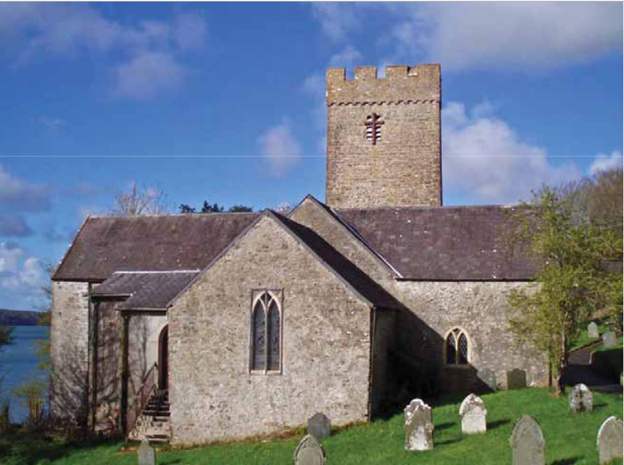
The Structural Development of St Tudwal’s Church, Llanstadwell (after Heneb PRN 3186)
Heneb, the Historic Environment Record maintained by the Dyfed Archaeological Trust, is the principal and authoritative source for archaeological and architectural evidence in the region, providing the basis for understanding the development of sites such as St Tudwal’s Church, Llanstadwell.
Using the evidence recorded in the Historic Environment Record for Heneb PRN 3186, it is possible to trace the medieval origins and structural development of St Tudwal’s Church at Llanstadwell through a series of clearly defined building phases. These reveal how the church evolved over time, from its medieval core to later alterations and additions.
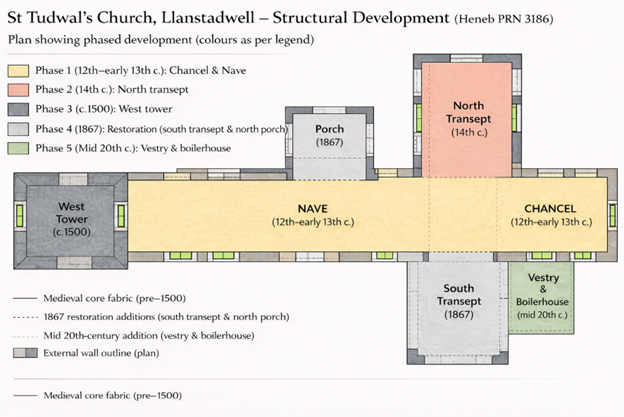
According to Heneb PRN 3186, St Tudwal’s Church is a multi-phase structure retaining approximately 80% pre-nineteenth century core fabric, much of it now lying below present ground level due to later alteration.[1] The building as it stands today is the result of successive phases of development from the twelfth century through to the twentieth
Phase 1: Chancel and Nave (12th–early 13th century)
The earliest surviving fabric comprises the chancel and nave, attributed to the late twelfth or early thirteenth century.[1] These elements form the core of the church and establish its primary longitudinal plan, consisting of a two-bayed chancel and a wider four-bayed nave.
The medieval construction is in large limestone rubble, originally unsquared and uncoursed, and later covered in eighteenth-century render. Although much of this early fabric survives, its appearance has been significantly altered by later work. In particular, the walls of both nave and chancel were heightened during the restoration of 1876, and internal floor levels were raised by approximately one metre, burying the lower portions of the original structure.
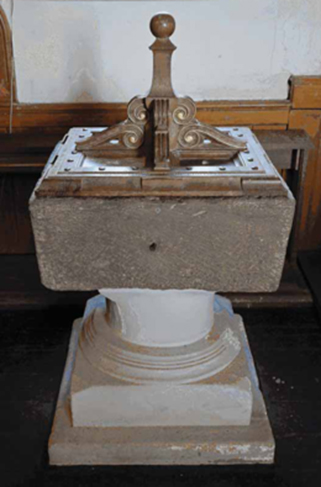
The Font
Within the Nave there is a font, consisting of a square medieval bowl dated to the twelfth or early thirteenth century, which is among the earliest surviving features of the church. Although it now stands on a later nineteenth-century base, the bowl itself is contemporary with the original construction of the nave and chancel. Its position towards the west end of the building is significant. The Heneb record notes that the west tower formerly contained an entrance doorway, now blocked, indicating that access to the church was originally gained through the tower. The placement of the font near this point reflects established medieval practice, whereby baptism was performed at the threshold of the church, symbolising entry into the Christian community. The relationship between the font and the former west entrance therefore preserves an important aspect of the original liturgical arrangement.
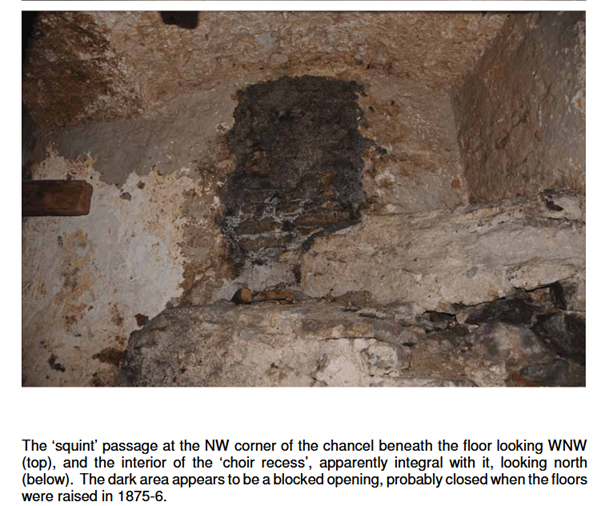
Within the Chancel the church, above and beneath the floor, retains evidence of a former blocked 'squint', more properly termed a 'hagioscope', located near the chancel arch. This opening would have allowed those in the north transept, private chapel, to view the high altar, particularly during the celebration of the Mass. Its presence indicates that the north transept functioned as a chapel space with a visual and liturgical relationship to the chancel. Although such features have sometimes been described in popular tradition as 'leper windows', this interpretation is not supported by architectural or historical evidence. Hagioscopes are a recognised feature of medieval church design, intended to maintain sightlines to the altar rather than to isolate individuals from worship.
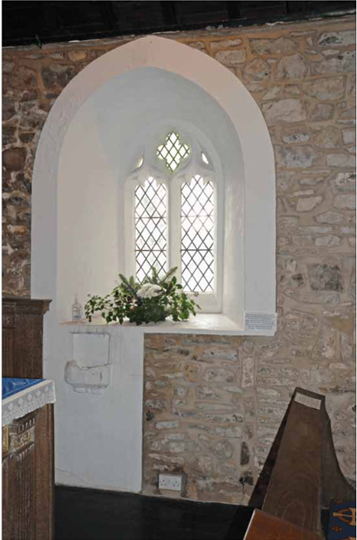
Within the chancel, a plain medieval 'piscina' survives in the south wall, marking the position of the high altar and providing for the ritual washing of vessels used in the Mass.
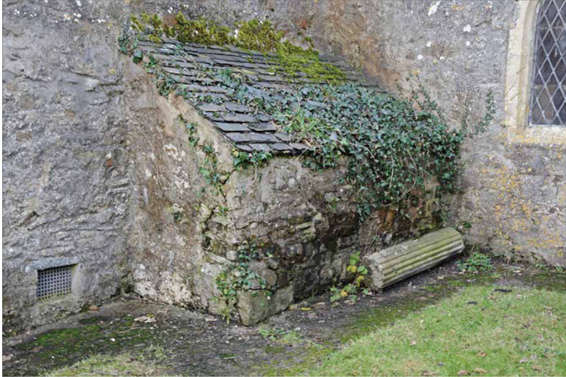
In addition, the north wall contains the remains of a former 'choir recess', visible externally as a square projection and identified in the Heneb record as a later medieval insertion. Dated to the fourteenth or fifteenth century, this feature is characteristic of a group of Pembrokeshire churches and reflects a development in the use of the chancel, providing space associated with the clergy or choir during the conduct of services. Its presence indicates that the chancel at Llanstadwell underwent a phase of liturgical enhancement beyond its original twelfth- to early thirteenth-century form.
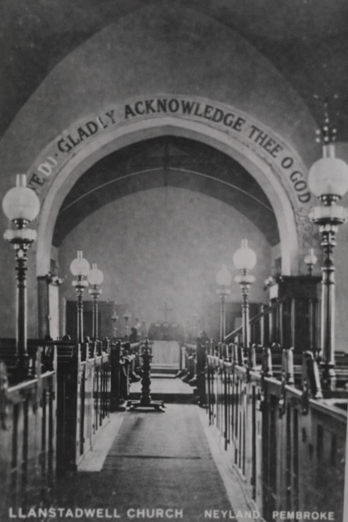
The possibility that the original chancel arch was Romanesque has been noted in earlier antiquarian accounts, supporting the twelfth to early thirteenth century dating. Taken together, this phase represents the initial stone church on the site, forming the basis for all subsequent development.
This phase establishes the basic longitudinal plan of the church, consistent with parish church development in Norman Pembrokeshire.
Phase 2: North Transept (14th century)
The north transept, added in the fourteenth century, represents a significant development in the plan of the church and is best understood as a subsidiary chapel space.[1]
Evidence recorded in the Heneb record indicates that the east wall formerly contained a window of notably high quality, this 'east window' is described by Stephen Glynne as having “two trefoiled ogee lights, with a foiled circle”, the stonework of which was later removed and reused in the north porch.
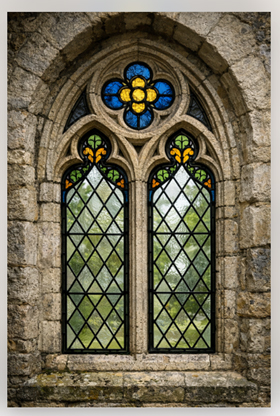
An AI recreation of the former east window, with
“two trefoiled ogee lights, and a foiled circle”
The refinement of this tracery, together with the liturgical orientation of the transept, strongly suggests the presence of an altar within this space. Its association with a now-blocked hagioscope, providing a view towards the high altar, further reinforces its role as an active chapel.
While direct documentary evidence is lacking, the architectural quality and functional arrangement of the north transept are consistent with its use as a private chapel, likely associated with an individual or family of high status within the parish. Such chapels were a common feature of later medieval church development, reflecting both the increasing complexity of worship and the role of local patronage in shaping parish churches.
This addition reflects both liturgical development and the increasing importance of subsidiary devotional spaces within parish churches.
Phase 3: West Tower (c1500)
While local tradition has described the tower as Norman, this view reflects earlier antiquarian interpretation rather than firm evidence. The archaeological assessment recorded by Heneb (PRN 3186) identifies the tower as a late medieval addition of around 1500, based on its structural form and comparison with regional examples. This evidence-based dating is to be preferred, as the tower’s features are consistent with the established type of Pembrokeshire towers of the later medieval period. However in 2011 when the Tower was being restored, a report by Jerry Samson of Caroe & Partners Architects, reported that although the tower, “dated to c.1500, it appears to be of two periods, retaining what seems to be a fragment of an earlier stair at its south-eastern angle”. Could this be evidence of a Norman Tower?
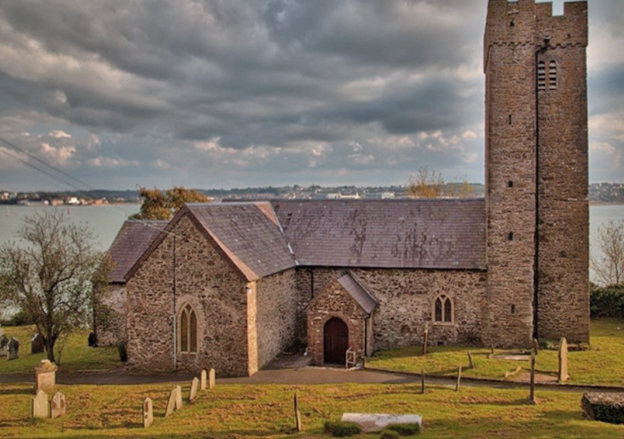
The west tower was added around 1500 and is described in the Heneb record (PRN 3186) as a three-storeyed structure, slightly tapered and with the basal batter characteristic of Pembrokeshire towers of this period. It incorporates a square spiral stair turret projecting from the north-east corner, constructed with Old Red Sandstone quoins and lit by slit lights. The ground floor is barrel-vaulted and opens into the nave through a two-centred arch, while the upper stages are defined by a string course and lit by simple openings, with the belfry stage featuring two-light openings with two-centred heads. The parapet rests on a plain corbel table. These features are consistent with the established form of late medieval towers in the region and support the dating given in the Heneb record.
This phase represents the final major addition of the medieval church, enhancing both its functional and visual presence within the landscape.
Phase 4: Restoration (1867, high impact)
The most significant alteration to the building occurred during the restoration of 1867, described in the Heneb record as high impact.[1] This work involved the raising of all internal floor levels by approximately one metre (four feet) and the corresponding heightening of the walls of the nave, chancel, and transepts. The chancel arch was rebuilt, new arches were inserted, and the church was extensively refenestrated, while the south transept and north porch were newly constructed.
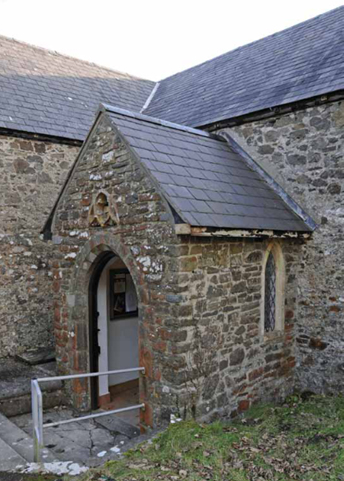
These changes substantially altered the visible character of the church; however, they also resulted in the burial of earlier structural elements. Heneb records that the raising of internal levels has preserved the lower portions of the medieval walls and floors beneath the present surface. As a consequence, a significant proportion of the earlier fabric now survives below ground, giving the site considerable archaeological importance. The record further notes the archaeological potential of the church as excellent, with buried deposits largely undisturbed by later interventions.
The restoration changes of this phase resulted in the burial of earlier wall bases and floor levels, preserving archaeological deposits beneath later surfaces while significantly altering the visible fabric.
Phase 5: Vestry and Boilerhouse (mid 20th century)
Further alteration occurred in the mid twentieth century with the construction of a vestry and boilerhouse in the angle between the chancel and south transept.[1] As recorded in the Heneb record, this is a two-storeyed structure of brick construction with a pebbledash finish, incorporating a boiler at basement level and accessed by an external stair. The addition represents a significant functional adaptation of the church, introducing a permanent heating system.
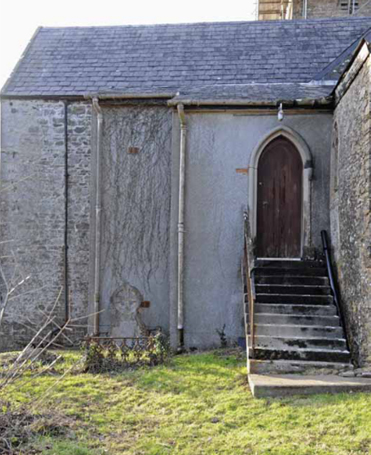
Prior to this development, the church would have been unheated, as was typical of medieval and early post-medieval parish churches. The interior environment would have been cold and often damp, particularly during the winter months, with little provision for comfort beyond clothing and occasional localised heat sources. The installation of a boiler and associated vestry accommodation reflects changing expectations in the twentieth century, allowing the building to remain in regular use while fundamentally altering the experience of the interior space.
Materials and Fabric
The medieval fabric of the church is constructed in large limestone rubble, originally unsquared and uncoursed and lacking dressed quoins, and later covered with eighteenth-century lime render.[1] This relatively crude construction contrasts with later work, particularly the restoration of 1876, where masonry is more regular and frequently quoined, with extensive repointing.
A notable exception occurs in the west tower, where the stair turret incorporates large dressed quoins of Old Red Sandstone, as recorded in the Heneb description. This material differs from the local limestone and indicates the selective use of higher-quality stone for structural elements such as corners and stair construction. Although the precise source of this stone is not recorded, it was likely either imported from elsewhere in Pembrokeshire (Nolton or Roch belt), or reused from earlier structures, reflecting common medieval building practice.
All internal wall surfaces are plastered, largely the result of nineteenth-century restoration, which has obscured much of the underlying fabric while preserving it beneath later finishes.
Archaeological Context
The church possesses considerable archaeological potential, described in the Heneb record as excellent.[1] During the restoration of 1867, internal floor levels were raised by approximately one metre (four feet), resulting in the burial of earlier floors and the lower portions of the medieval walls. As a consequence, a substantial body of early fabric now survives beneath the present surface. Importantly, the later insertion of suspended floors has not disturbed these underlying deposits.
Heneb states that the raising of the internal floor levels in Victorian times has actually preserved earlier deposits beneath the present surface. These are likely to include former floor levels, the lower courses of the medieval walls, and potentially buried features associated with the original arrangement of the church. It is also probable that interments (burials) survive beneath the floor. Burial within the church was a recognised practice in the medieval period, generally reserved for clergy and individuals of status within the parish, particularly in areas such as the chancel or subsidiary chapels. The finding of a medieval effigy within the church, under the floor in 2011, supports this interpretation, and suggests that further burials may remain preserved below the present floor level.
The Heneb record notes externally there is the presence of a deep, revetted cutting around part of the church. This refers to an area where the ground has been deliberately lowered and the sides of the cut have been reinforced or supported, typically with masonry, to prevent collapse.
The term 'revetted' derives from revetment, meaning a retaining structure used to stabilise exposed earth. Such a feature is likely to have been created in response to the raising of the internal floor levels in the nineteenth century, requiring the external ground to be reduced to maintain access and protect the walls from damp. Importantly, Heneb records that this cutting does not expose the foundations and has not disturbed the underlying archaeological deposits, which therefore remain preserved beneath the present surface.
Summary
The development of St Tudwal’s Church can be traced through a series of defined phases recorded in the Heneb Historic Environment Record (PRN 3186). The earliest surviving fabric is the chancel and nave of the late twelfth to early thirteenth century, forming the core of the building in unsquared limestone rubble. In the fourteenth century, the north transept was added as a subsidiary chapel, evidenced by the former presence of a high-quality east window, while further refinement of the chancel followed with the insertion of a choir recess in the fourteenth to fifteenth century.
Around 1500, the west tower was constructed, representing the final major medieval phase and conforming to the established Pembrokeshire tower type. The restoration of 1867, described as high impact, significantly altered the building through the raising of floors and walls, refenestration, and the addition of the south transept and north porch, while preserving earlier fabric beneath the present surface. Further adaptation occurred in the mid twentieth century with the construction of a vestry and boilerhouse.
The present church is therefore a layered structure in which substantial medieval fabric survives, much of it below ground, preserving the essential plan despite later alteration.
Footnote
[1] Heneb (Dyfed Archaeological Trust), Historic Environment Record, St Tudwal’s Church, Llanstadwel, Pembrokeshire (PRN 3186), updated September 2021.
Some of the internal photographs are courtesy of Caroe & Partners Architects, from works undertaken during the 2011 tower restoration (report by Jerry Sampson).