By Alan Brown
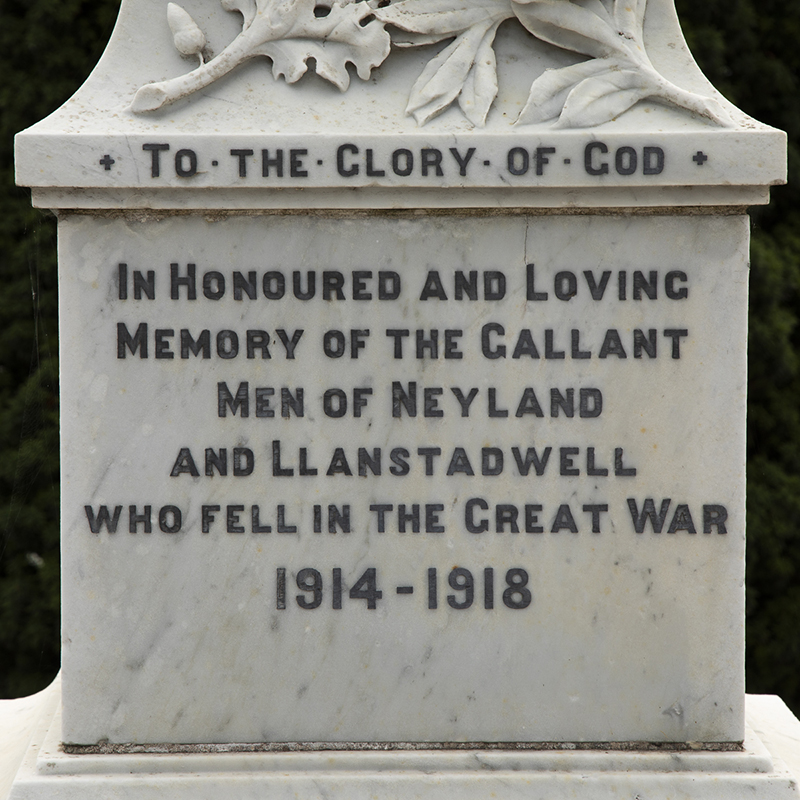
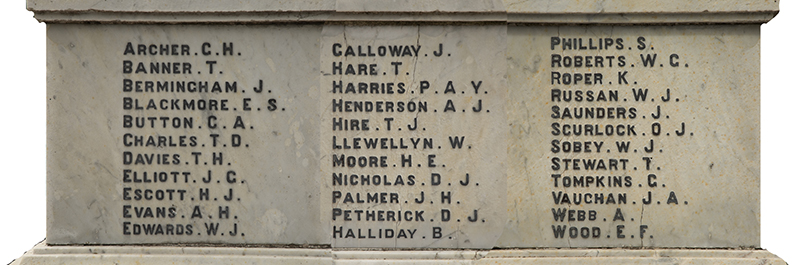
Following the defeat of Napoleon at Waterloo in 1815, which permanently removed the threat of invasion by the French, Great Britain enjoyed nearly a century of peace, with the exceptions of the Crimean War and the Boer War, both of which were relatively small-scale and localised. When a 1914 political assassination in far-off Sarajevo triggered off the conflict that would be known first as the Great War, and later as the First World War, young men who knew nothing of warfare were encouraged to join up as soldiers in the belief that they were heading for a short-lived confrontation that would feel like a big patriotic adventure. Neyland’s war memorial bears the name of the thirty-four men who died; it was initially erected in the park opposite the South Wales Hotel, but was later moved to a more prominent location at the top of Riverside Avenue.
In 1914, the novelist H G Wells optimistically coined the phrase ‘the war to end all wars’, in the belief that the Great War would bring a permanent end to international conflict. It dragged on for four years and, instead of bringing a lasting peace to Europe, it resulted in unstable social conditions in several of the participant countries which eventually led to the outbreak of the Second World War in 1939. This second global conflict caused three times as many deaths as the first in total but, thankfully, the death toll among soldiers from Llanstadwell parish was much the same as the first, with thirty-five men killed. In addition, the Neyland memorial bears the names of four women from Hazelbeach who died in a 1941 air raid, and also the name of John Mathias, a Honeyborough boy who was killed at the age of nineteen in the Korean War in 1952.
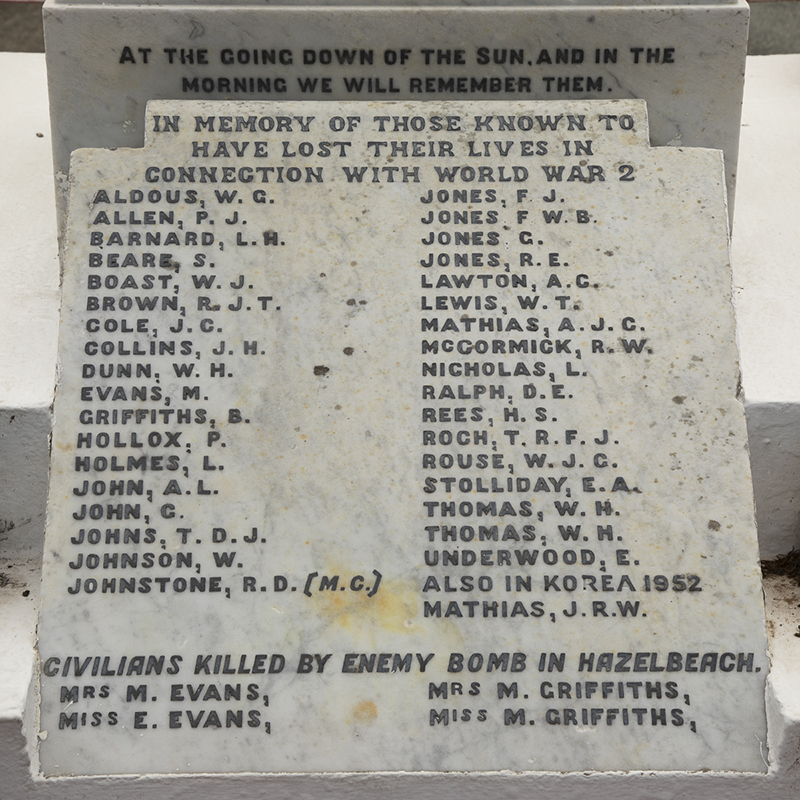
John, A.L, was my mother's cousin. He was normally known as Leonard; born in Neyland 1917, he was an only child; the 1939 wartime register informs us that he was working as a 'gents outfitting manager'. He was called up early in the war and joined the South Staffordshire Regiment. In 1943 they were sent off to join the British forces in India; Leonard was killed in Burma on 23rd June 1944.
There are 73 more names on the memorial; if you see any of your own family members here, and would like to add their story, then get in touch on