By Tony Organ
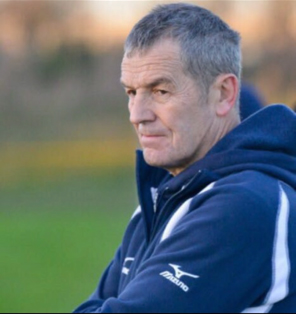
Graham, along with his two brothers, spent much of his adolescent years growing up in West Lane, Honeyborough. He recalls his first senior game for Neyland at the age of 16. With only 14 other available players, he turned out on a Wednesday evening at Tenby. One full season with Milford Youth followed prior to his commencing a varied career starting with the Navy. He represented the service in the Navy’s under-19s at Twickenham prior to playing senior rugby for Davenport Services and the United Services, Portsmouth.
After leaving the Navy, Graham played in Scotland prior to returning home and joining the Dyfed & Powys Police Force. Ambition quickly took him to the Metropolitan Police in London, and that’s where he turned out for the 1st XV in the company of the likes of Martin Bayfield and Paul Ackford (both England & British Lions players).
Outside of the police force he joined London Irish, and this was a landmark in his career as a coach. Having played in the senior team he began coaching the club’s under-21s. From this squad of young players, Jim Staples, Simon Geoghan and Paul Burke went on to gain full Irish caps.
In 1984 Graham’s aspiration was fulfilled when he joined the Mounted Police. During his time in this position he competed three times at the Royal Tournament in the equine ‘Skill at Arms’ – in 1986/87/88. His mentor was Norman Edwards (a first cousin to the great Gareth Edwards – Wales and British Lions). His coaching continued with London Irish and he was overall responsible for the coaching structures at junior, youth and under-21s. He remained with the club until 1989, when he succumbed to an accident at work when a horse fell on him.
So the next chapter comprised a return home to Neyland at a time when John Preece was Chairman of the Rugby Club. He completed his Level 2 coaching qualification with the WRU at Aberystwyth, which was followed by a three year long Level 3 course with regular residentials at Usk in the company of some 18 high profile players. From 1991 to 1994 Graham took on the mantle of coach to his ‘home town club’. During this period there developed a high level of camaraderie, with some pre-season training facilitated with Neath RFC and the games fully videoed and analysed at the Neath club on a weekly basis. It was a time when the club booked two coaches for every away game: one for the players and committee, the other for supporters.
In 1995 Graham’s coaching career took on an international dimension when he was contacted by Andy Keast, with whom he had played rugby (and some cricket) whilst at the Met. Andy had met the Chairman of Durban Harlequins, Mike Gedye, whilst staying in London. He was invited by Mike to apply for a sabbatical from the Met and take on the role of coaching coordinator for the Natal Rugby Union. The standard of professional coaching in South Africa was beginning to take on new dimensions in 1995, and Graham received an invitation from Andy to join him and take up a position as coach.
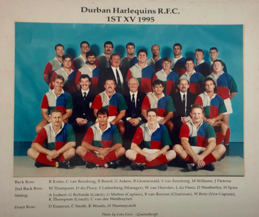
Here he spent 3 full seasons coaching Natal under-21s and as co-ordinator for Southern Natal. It was a time when Natal embraced professionalism more than any other province. The Durban club at that time boasted the likes of Andre Joubert and Cabous van de Westhuizen.
After his three years in South Africa, Graham returned to the UK where he joined the coaching staff at London Harlequins for the 1997/98 season, before becoming the first professional coach at Harlow, where he spent four years. His penultimate professional position took on another international dimension when he became Director of Rugby at the Malta Rugby Union from 2002-2005. During that time the national team rose from a ranking of 102nd in the world to 52nd. It was during that period when 6 or 7 Cardiff players went out to play on the island and BBC 2 Wales produced a series of half hour programmes about Malta Rugby called “The Other Grand Slam”.
Back from Malta, and Graham worked at South Hook for two years before being persuaded to take up a post for four years as rugby coach at St. Joseph’s College in Ipswich. Subsequent to that his final coaching role was with Sudbury in Suffolk.