By Alan Brown
The sheltered waters of the Cleddau estuary have provided a safe anchorage for shipping from the earliest times. Its position on the western coast of Wales made it relatively secure from attack by enemies from the European mainland, which was a very real fear during the reign of Napoleon at the turn of the 19th century, so the Milford Haven waterway was chosen as the location for a major shipyard for the construction of warships for the Royal Navy. The first ships were built at the town of Milford, but disputes with the landowner there caused the Admiralty to relocate a few miles further eastwards to a waterside site just north of Pembroke; this dockyard, founded in 1813, along with the town that grew up to service its needs, became known as Pembroke Dock. A chain of defensive fortifications was built along the banks of the Cleddau, armed with cannon that could cover the whole of the waterway. Within the parish of Llanstadwell, a major structure was created on the high ground to the west of little Honeyborough: taking its name from a nearby farm, it became known as Scoveston Fort. It was made accessible by the construction of a new roadway from Church Lakes; this still bears the name of ‘Military Road’.
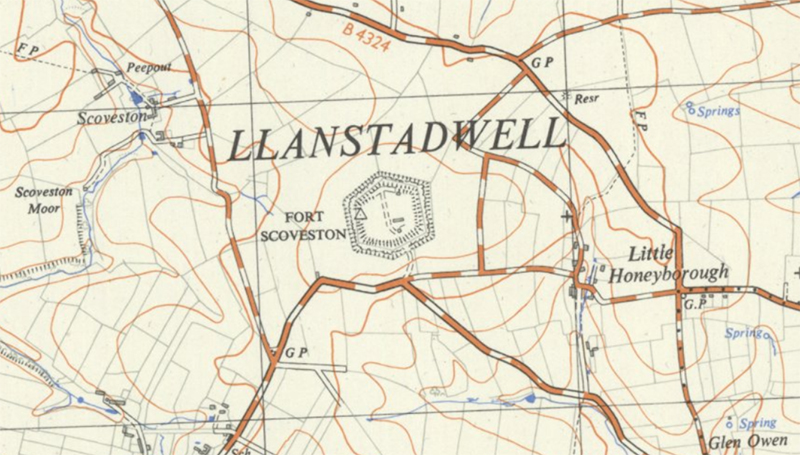
While it had originally been intended that Scoveston Fort should be armed with artillery that could fire at enemy ships anywhere within the waters of Milford Haven, the big guns were never installed. Although the elevated site gave clear views of the surrounding countryside, there was no line of sight to the Haven itself and, with the danger of invasion from France being by then a thing of the past, on its completion in 1868 the fort took on the role of a fortified barracks. No permanent garrison was ever stationed there so, apart from being used for training purposes, for nearly fifty years Scoveston Fort never served any significant military function.
The situation changed with the outbreak of the Great War in 1914, when the fort came into use for housing and training troops. The Military Road was upgraded and resurfaced to accommodate motorised traffic and it became well used by the marching soldiers coming from, or going to, Neyland railway station.
Following the end of hostilities in 1918, the fort fell into disuse, apart from a brief spell during the Second World War when it was used as a rifle range for the Home Guard and Army cadets, and sometimes as an unofficial air raid shelter for protection from the German bombs.
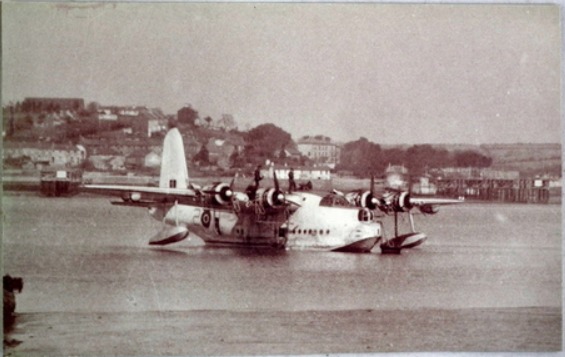
The 1939 – 45 war saw renewed military activity on the waters of Milford Haven. In addition to the demands of the Navy and the Royal Dockyard, the green fields of Pembrokeshire were the site for several temporary airfields, while the waterway itself became the home for squadrons of Sunderland and Catalina flying boats.
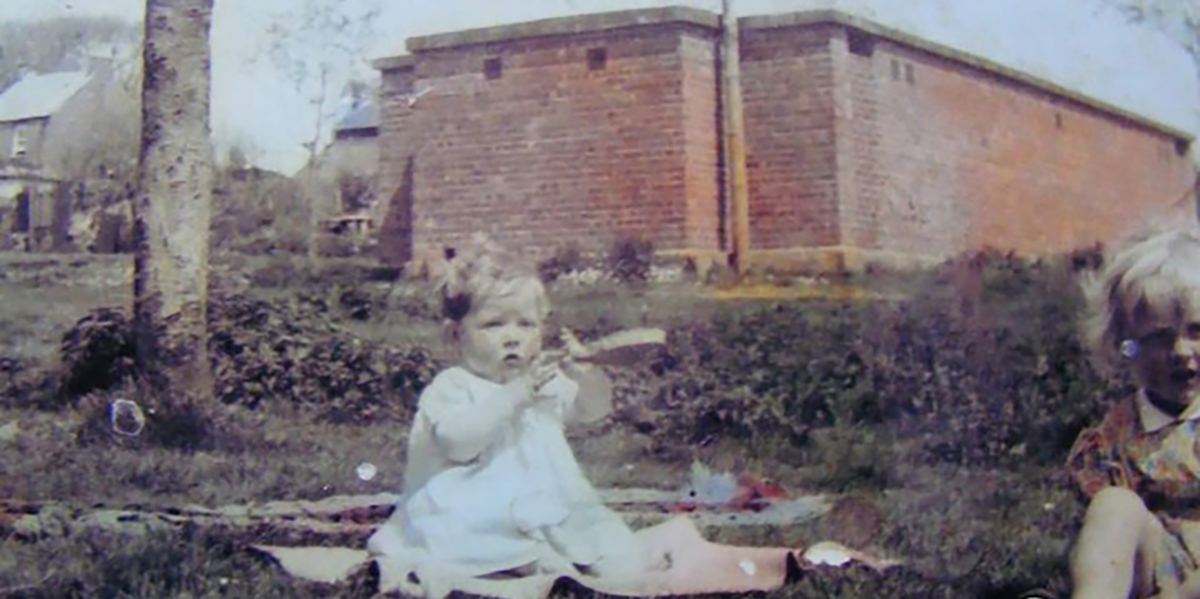
Due to their proximity to the Naval Dockyard, Neyland and Llanstadwell were equipped with defences against German air raids. Five barrage balloons flew as permanent deterrents to night raiders: one above Church Lakes, two were anchored in the fields above Great and Little Honeyborough, one at Waterston and one at Hazel Hill. A searchlight station operated from Upper Scoveston Farm, and several brick air raid shelters were built around the town.
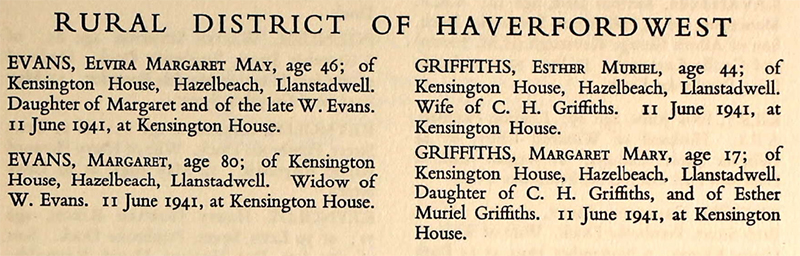
This area had suffered badly from the economic depression of the 1920s and 30s, but, in the tradition of ill winds everywhere, the war brought a brief period of full employment to the citizens of Neyland with many, both men and women, finding work at the Royal Naval Armaments Depot which was constructed on waterside land near Newton Noyes, on the outskirts of Milford town. Servicemen from all parts of the British Empire and the USA descended on Pembrokeshire and brought a cosmopolitan feel to the dancehalls of the otherwise parochial towns of Neyland and Pembroke Dock. While the latter was the regular target for German bombing, with many fatalities, Neyland was generally lucky in this respect, with a few bombs falling on open fields. There was one tragic exception: on 11th June 1941, a stray land mine landed on a house in Hazelbeach, killing four women: two mothers and their daughters, Margaret and Elvira Evans, and Esther and Margaret Griffiths, who were all sheltering inside. Their names appear on the Neyland War Memorial.
Map is reproduced with the permission of the National Library of Scotland https://maps.nls.uk/
Bibliography
Davies, D N. (1997) The End of the Line – A History of Neyland. Pembrokeshire: Pembrokeshire County Council Cultural Services
Mason, R (undated) personal notes