By Alan Brown
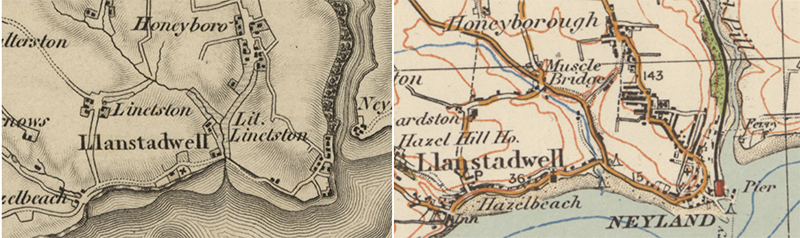
The Industrial Revolution was a long time coming to south-west Wales, and in the days before the steam trains arrived, Pembrokeshire was far more accessible by water than by land. The main local ports were Pembroke, Haverfordwest and Tenby; sailing ships visiting these, along with the numerous smaller ports and harbours on the coast and along the Cleddau, could carry substantial quantities of agricultural products and minerals as well as passengers. The only alternative was horse-borne transport on the primitive roads that existed at that time; at the beginning of the 19th century, a land-based journey from Llanstadwell parish to London would have taken the best part of a week to cover the two hundred and fifty miles. The railway revolutionised journey times for both people and goods.
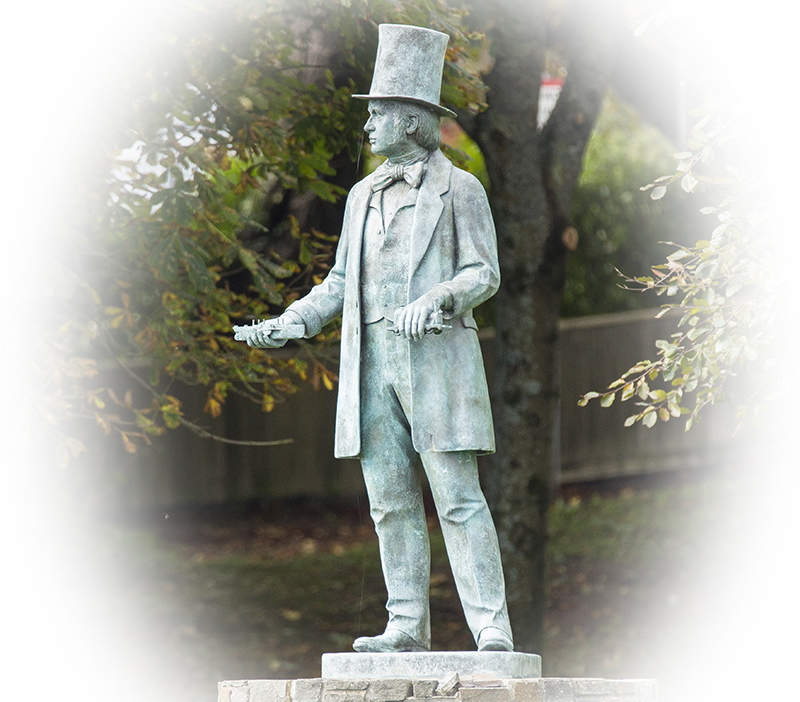
The second quarter of the 19th century had seen a rapid growth in the railway network throughout England; at that time there were numerous private companies that competed with one another to establish the most profitable routes between the cities and larger towns. In 1841 the Great Western Railway had begun to run trains on its service between London and Bristol; its directors could see the potential profits from a line that continued westwards along the south Welsh coast, with the ultimate aim of reaching a port that could link up with cargo ships carrying freight from southern Ireland. Responsibility for planning and building this new route was given to the GWR’s brilliant, twenty-seven year old Head of Engineering: his name was Isambard Kingdom Brunel, and the new line was to be known as the South Wales Railway.
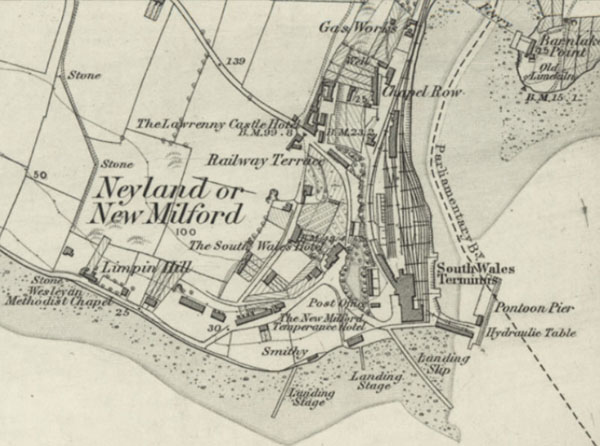
The SWR’s original choice of a port for this Irish connection was Fishguard, on the north coast of Pembrokeshire. However, various practical obstacles resulted in a change of plan, and a transfer port in the south of the county came to be preferred instead, with various sites being considered. The Royal Naval Dockyard at Pembroke Dock would benefit greatly from a rail connection, but its location south of the Cleddau cut it off from the rest of the county. The people of Milford thought that their town was an obvious candidate, with its existing harbour and a thriving fishing trade. However, Brunel disappointed them and chose, instead, a location in the parish of Llanstadwell, five miles to the east, on the bank of a small tidal branch of the Cleddau. There was nothing there apart from a small village consisting of a handful of cottages, inhabited mostly by the families of fishermen and boatbuilders. Unfortunately for them, their homes would have to be demolished to make way for Brunel’s grand scheme; the name of this village was Neyland.
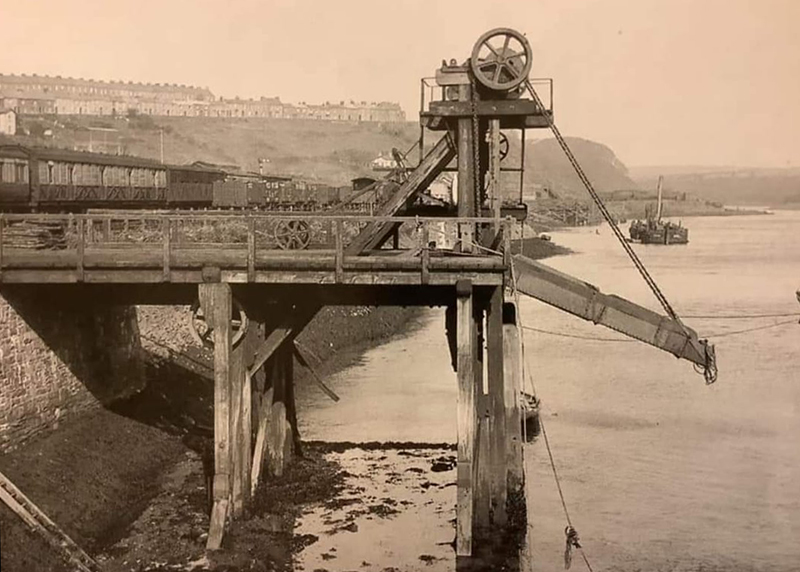
The South Wales Railway had begun to run trains as far as Haverfordwest by the end of 1853, and the construction of the route to Neyland, via Johnston, began soon afterwards. Naturally, all construction work was done by manpower at that time and over 1,000 navvies were employed in cutting, blasting and levelling the route. The shore at Neyland Point had to be built up to accommodate the station; apart from a few rails buried in the tarmac, no traces of the lines and station now remain, but at one time they occupied all of the flat land that is now covered by the buildings and car parks of Neyland Marina.
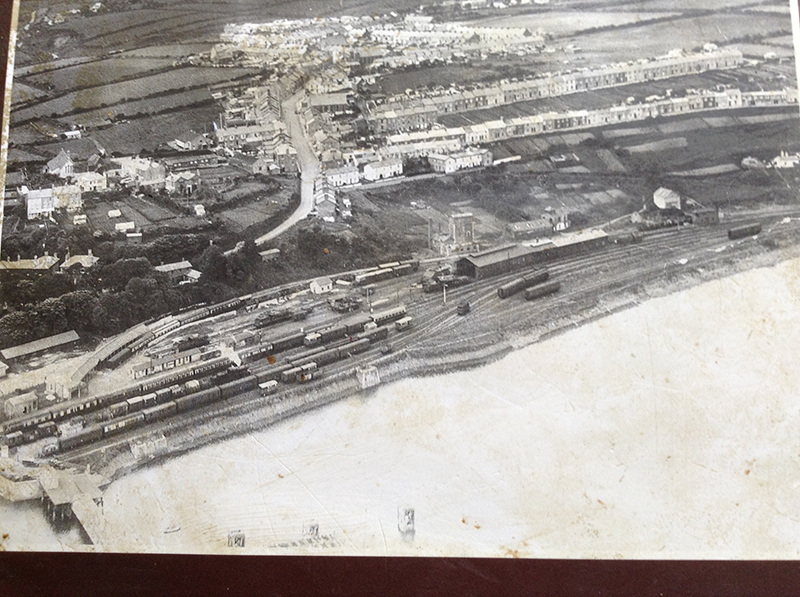
Steam engines require a supply of fresh water for their boilers. A reservoir was built on land near to the Westfield cornmill; it was fed by a pumping station with water from the stream, and this water was then piped downhill to the water tower in the station grounds. The station buildings were lit by gas lamps, and gas at that time was produced by distillation from coal; there were several local coal mines that could supply the station’s needs, so the gas was produced on the premises by a small gasworks and stored in a gasometer until needed.
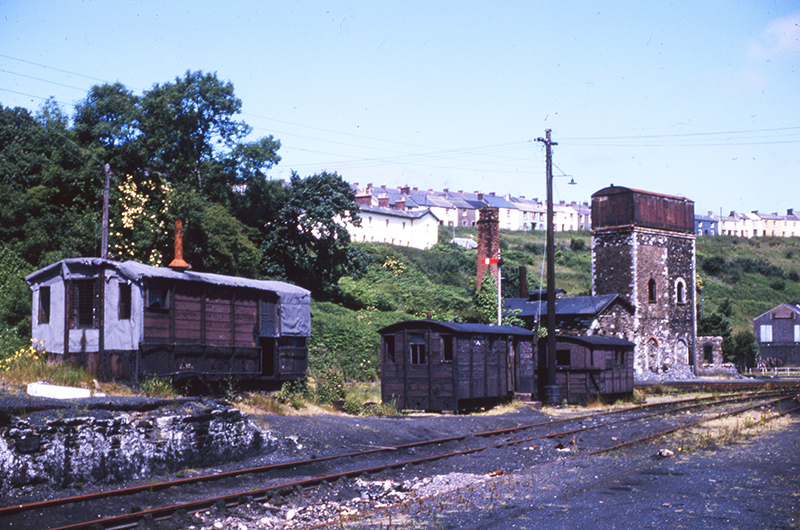
Neyland station was officially opened on 15th April 1856. The construction and operation of the station marked the beginning of a new life for the area; instead of being just one of the small villages in Llanstadwell parish, the new town of Neyland became the focus for economic and social activities in the locality. There was an immediate need for housing, initially for the displaced residents of the original village of Neyland, and then also for the influx of workers who came to take up jobs at the station. In addition to the engine drivers, firemen and guards on the trains, men were required for a variety of positions in and around the station, as well as for cleaning and maintenance of the rolling stock; all of these were under the watchful eye of the stationmaster. Llanstadwell men had been introduced to industrial employment earlier in the 19th century with the opening of the Naval Dockyard, but the railway offered regular and relatively well-paid work without the requirement of having to commute across the Cleddau. Five years after the station’s opening, the census of 1861 informs us that 99 local men had taken up jobs with the South Wales Railway; this is out of the 575 men of the parish who were recorded as working at that time.
In terms of Neyland’s communications with the rest of Britain, Brunel brought a total transformation; right up until the closure of the station in 1963, any enterprising Neylanders who left their home town to seek their fortune in the wider world were said to have 'gone up the line'. Previously, the journey to London by sailing ship or coach would have taken at least four or five days; the steam trains made it possible to have your breakfast in Neyland and your evening meal in the nation’s capital. However, Neyland’s monopoly on local traffic did not last. The enterprising citizens of Milford set up their own railway company and paid for the construction of their own line, and in 1863 this branch joined on to the SWR’s original main line by means of a junction at Johnston. In the same year, the South Wales Railway became incorporated into its parent company, the Great Western Railway. A further reduction to Neyland’s traffic occurred when another new line was constructed south of the Cleddau: despite long-running legal delays, the Pembroke and Tenby Railway eventually opened in 1864, with a junction onto the GWR’s main line at Whitland. This line terminated at the town of Pembroke Dock, with a single-track extension that carried on into the heart of the dockyard itself.
When Brunel’s line first reached the Cleddau in 1856, the name of Neyland would have meant nothing to Londoners, so it was decided to christen the new terminus as ‘Milford Haven’. This term is still ambiguous, since it now refers to both the town and the Cleddau waterway, but it should be noted that the town which is now known as Milford Haven was known simply as ‘Milford’ until 1894. This immediately caused confusion and resentment on all sides, and in 1859 the company changed the name of the station at Neyland to ‘New Milford’. When the station in the town of Milford opened in 1863, the GWR named it ‘Old Milford’; this attempt to differentiate between the two stations had the opposite effect and, instead, just caused more confusion. Despite this, the railway company persisted and did not relent until 1906, when the station finally became known as ‘Neyland’.
A major disruption to Brunel's original scheme took place in 1872. The Great Western Railway had been built, throughout its length, using 'broad gauge' rails. Brunel believed, with some justification, that rails which were separated by a gap of seven feet would provide a faster and more comfortable ride for passengers. However, the rival railway companies throughout the UK had chosen to use a gap of four feet, eight and a half inches: this became known as standard gauge. The majority view prevailed, in the interests of both compatibility and economics, so in May of 1872 a rapid exercise in transformation took place and the GWR reluctantly converted all of its rails and rolling stock. Some of Brunel's original rails were preserved at Neyland, and were later recycled into a different function: they can still be seen near Brunel's statue, where they are in use as railings.
The other major event of 1906 was the relocation of the Irish Ferry service from Neyland to Fishguard. Brunel’s original ambition, which had been for his new town of Neyland to become a major port for marine traffic to both Ireland and America, was gradually failing. With the loss of the ferry service there was minimal passenger usage at Neyland station, but at the same time this was compensated for by an increase in goods traffic, mainly in the form of coal, fish, livestock and agricultural produce. The station continued to be used for the cleaning and maintenance of engines and rolling stock, and in the 1911 census it can be seen that it still employed roughly one sixth of all local men of working age. One Neyland boy, Bill Morgan, began working for the GWR at the age of fourteen in 1916, starting at the bottom as a cleaner and 'knocker-up' and slowly working his way up through the hierarchy of jobs until he achieved his ambition of becoming a driver on the express steam locomotives that took passengers and goods all the way to London Paddington. With the help of his daughter, Bette Meyrick, he provided an excellent account of his life in his autobiography, 'Behind the Steam'.
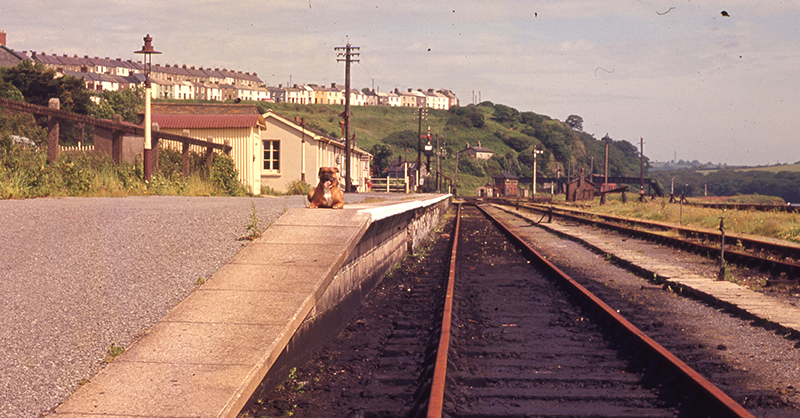
The station survived through the worst disasters of the 20th century: two world wars and the inter-war economic depression, which was made far worse for Pembrokeshire by the closure of the Royal Naval Dockyard in 1926. Throughout this lean period, Neyland station and maintenance depot offered secure employment to local men at a time when there were very few alternatives. The general decline in activity that followed WW2 resulted in a major rationalisation of the railway network, with the patchwork of regional operatives amalgamating in 1947 into a single entity named British Railways; the Great Western Railway became known simply as the ‘Western Region’. A more drastic reduction was to follow: this was overseen by the British Railways chairman, Dr Richard Beeching in the early 1960s: Neyland station was one of the victims of the ‘Beeching Cuts’ and ceased operation in 1963. The last train departed Neyland station on 8th September, and the following day the station and locomotive depot closed forever, with the loss of 114 jobs.
All maps are reproduced with the permission of the National Library of Scotland https://maps.nls.uk/
Bibliography
Davies, D N. (1997) The End of the Line – A History of Neyland. Pembrokeshire: Pembrokeshire County Council Cultural Services
Morgan, B & Meyrick, B. (1973) Behind the Steam. London: Hutchinson
Morris, J & Parker, R. (2008) The Railways of Pembrokeshire. Southampton: Noodle Books
Parker, R. (2002) Neyland – A Great Western Outpost. Bishops Waltham: KRB Publications