By Alan Brown
Education in Llanstadwell and Neyland
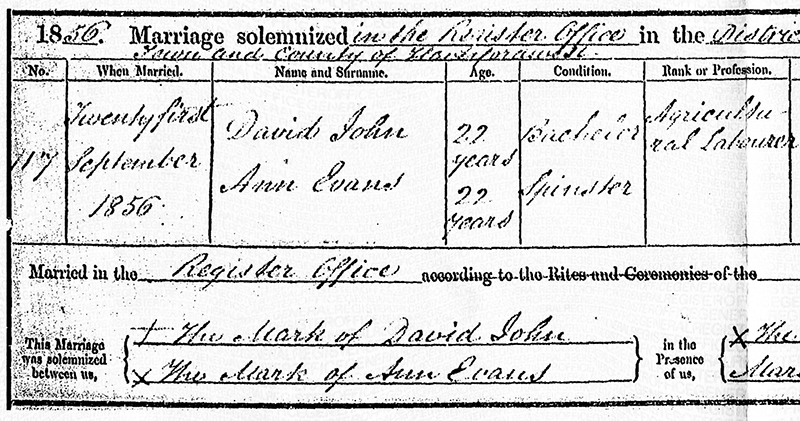
There was little need for formal education in the days when the majority of the men of Llanstadwell parish worked either on the local farms or else in the boatyards along the banks of the Cleddau, while nearly all women worked in the home. Manual skills could be passed on from generation to generation, just by observing and copying. Marriage records, which have been kept formally since 1837, show us how few people could read or write, since a large number simply signed the certificate with an ‘X’.
The middle of the 19th century saw some major changes in society, both locally and across the whole of England and Wales. The arrival of the railway in 1856 had brought Llanstadwell face to face with industrialisation, and with it came a demand for skilled and specialised labour, and also clerical positions that required both literacy and numeracy. In 1870, an Education Act was passed by parliament which, for the first time, began the process of educating the whole population by providing schools and introducing the concept of compulsory attendance.
Even before these events, rudimentary education had been provided by a small private school in the original village of Neyland, on the banks of Westfield Pill: it was known as the Neyland Ferry School. Small scale institutions of this kind offered limited teaching combined with childminding for children who were too young to help in the home or in the fields. A small weekly fee was charged for each child; financial help in the setting up of this school had come in the form of a bequest from Richard Mathias of Hayston, who had died in 1835. By the late 1840s the schoolhouse was in a very dilapidated condition and it was, perhaps, fortunate that it would have to be demolished to make way for the coming of the railway. In the 1851 census, two men in Llanstadwell gave their profession as schoolmasters: these were John Bowen, aged 70, and William Hitchings, aged 79; although there is no evidence to show where, or if, they were actively teaching.
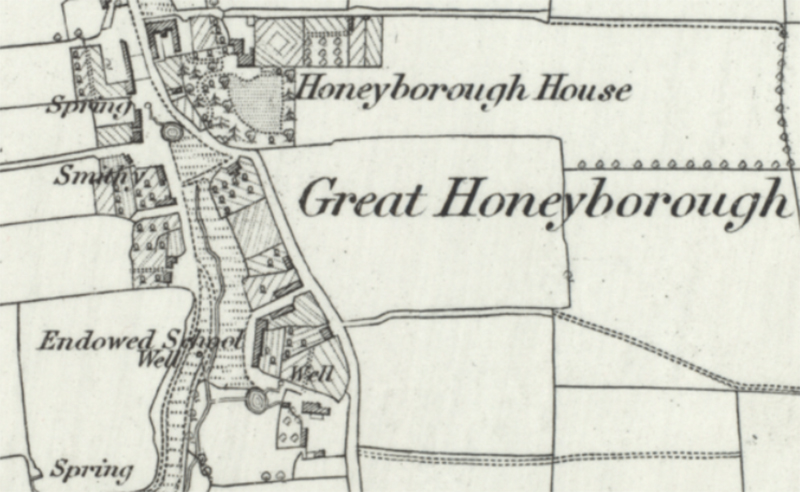
Towards the end of its life, the master of the Neyland Ferry School was named as a Mr Jones; when the old building was knocked down by the railway in the mid-1850s, a similar school was established in a cottage at the bottom end of Honeyborough Green, again with help from the Mathias Trust. In the 1861 census the teacher, Mr Jonoval Jones, can be found with his wife and four children, living at School House in Honeyborough, so it is a reasonable assumption that this was the same man: born in 1830, he was the son of a Carmarthen printer who was also a celebrated Eisteddfod bard. Sadly, Jonoval Jones died four years after this census was taken, aged just 35.
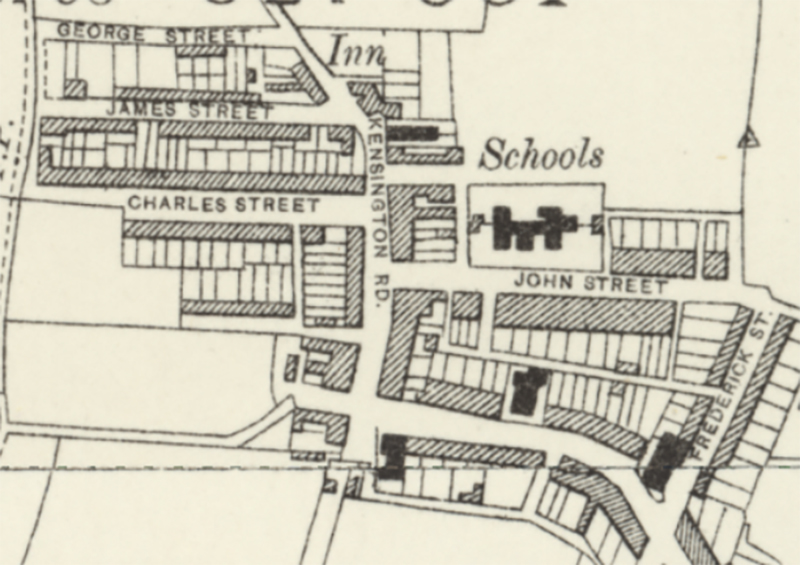
In 1865 a school was opened in Charles Street. It became known as the 'British School' because it had been set up by a private body, the British and Foreign Schools Society. This was an educational and philanthropic charity that had been established early in the 19th century and was explicitly non-denominational, hence its schools became particularly appealing to non-conformist parents. The new school's first headmaster was an Englishman, Mr William Aswell; remarkably, he was just twenty years of age when he took on this responsibility. As a result of the 1870 Education Act, local authorities became obliged to establish school boards, with the task of setting up and running education within their area. Consequently, a much larger school, which was to be named 'Llanstadwell Board School', was built in John Street and opened in 1874. This was intended as a direct replacement for the Charles Street institution, and Mr Aswell moved across the road and became the headteacher of the boys’ department, while a Miss Mills was appointed as girls’ headteacher, and a Miss Elsie Walker was in charge of the infants. In 1904 the name was officially changed to 'Neyland Council School' although it was informally referred to as 'the Board School' for many years afterwards. Mr Aswell remained at the school until his retirement, in 1911.
A smaller, church-run school grew up nearby at the same time. In 1862 the National Society for Promoting Religious Education, which had been founded in 1811 as a subsidiary of the Church of England, had opened a Sunday School at the top of Kensington Road, and this had expanded to full-time operation following the passing of the 1870 Act. It was known simply as the 'National School'. Due to its association with the established church, non-conformist parents tended to shun it, and instead preferred sending their children to the nominally secular Board School. Unsurprisingly, this resulted in a degree of rivalry between the two institutions.
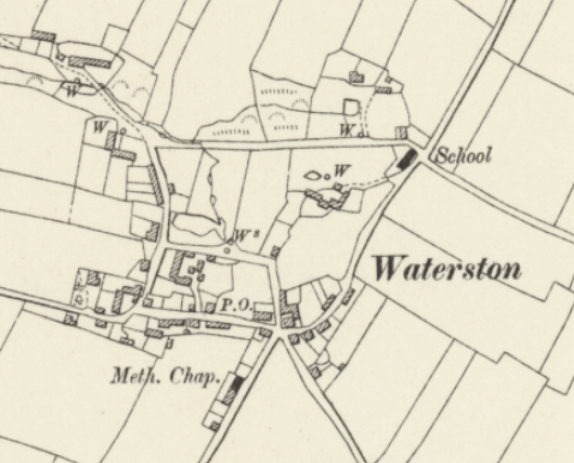
One further school was built locally in the Victorian era. The 'Llanstadwell Board School, Waterston', as it was officially known, opened its doors to the children of the village and surrounding area in 1872. This must have come as a great relief to its pupils, since Waterston is a relatively isolated settlement and it would otherwise have meant a long walk to Neyland. This school closed in 1998 and has since been converted to private housing.
An interesting feature of both National and Board schools was that, in their early days, they operated on the 'monitor system' whereby a small number of professional staff were assisted in their teaching duties by some of the more capable older pupils, known as monitors, and these took over the task of educating the youngest children. The 1870 Elementary Education Act had introduced the principle of compulsory schooling, initially for children from the ages of five to ten. However, for the first decade, local school boards had the final say in the matter and it was not until 1880 that a second Act of Parliament made school attendance a legal requirement. The school leaving age was progressively raised every few years: from 10 to 11 in 1893, then to 12 in 1899. In 1918, it was increased to 14, where it remained until the 1944 Education Act raised it again to 15. It stayed at this age for more than a quarter of a century until 1972, when it was increased once again, to 16. While the old Neyland schools had been adequate for the whole of a child’s education at the time when they were built, this slow increase in the age of the oldest pupils resulted in some of the more academically inclined children commuting daily on the ferry to attend the grammar school in Pembroke Dock.
A further consequence of the 1944 Act was the introduction of the eleven plus exam: those who passed went on to Haverfordwest Grammar, while children who failed this test went instead to one of the new secondary modern schools, which, in the case of the children of Neyland, meant a daily bus trip to Milford Central or Prendergast School in Haverfordwest. From then on, the Neyland schools would only be teaching children up to the age of 11 and, with falling demand, the National School on Kensington Road closed its doors in 1953.
In 1974 a new infants and nursery school was opened at the bottom of Charles Street. The John Street school, now catering only to the 7 - 11 age group, carried on in its original Victorian building until the second decade of the 21st century, when both of these schools were demolished and the pupils and staff were moved into a new building on the John Street site. It is now known as Neyland Community School.
In September 1956 a Technical College opened in Neyland, in new premises on St Clements Road. Its first principal was Mr D L Richards. This offered training and City & Guilds qualifications in a variety of technical and practical subjects, and was highly regarded by those who attended. Sadly, the teaching facilities were eventually transferred to Haverfordwest and the building is now used to house the Pembrokeshire Learning Centre, catering to pupils who fall outside of mainstream education, and also a playgroup for pre-school children.
All maps are reproduced with the permission of the National Library of Scotland: https://maps.nls.uk/
Bibliography
Davies, D N. (1997) The End of the Line – A History of Neyland. Pembrokeshire: Pembrokeshire County Council Cultural Services