By Professor Howell Harris
The Wrecks.
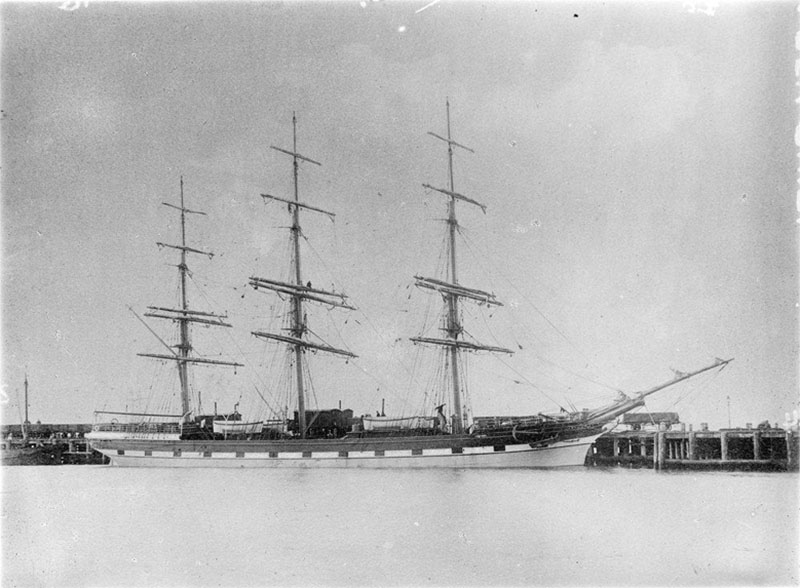
The Loch Shiel was Angle’s and probably Pembrokeshire’s most famous wreck, before the Sea Empress disaster -- wrecked on Thorn Island in December 1894 with a cargo of whisky (etc.) for Australia.
The Rouses began working on her remains, just around the point from where they lived, in the summer of 1900 -- they won £40 of iron scrap from her in the next three months. Not big money, but enough to make it worth carrying on with this new business.
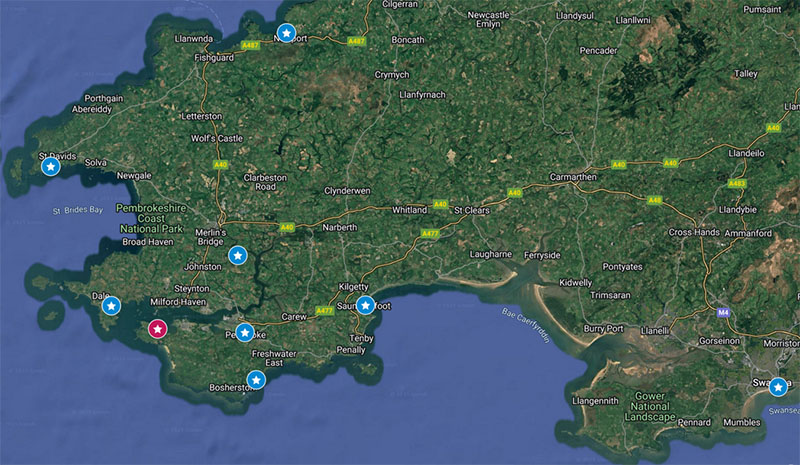
Why become marine salvors?
#Job creation: sons to employ
#Diversification: inshore fishing and coasting were crowded, declining trades
#Money: a dozen coasting trips in 1899-1901, averaging 33 tons of coal & culm, = £73 gross.
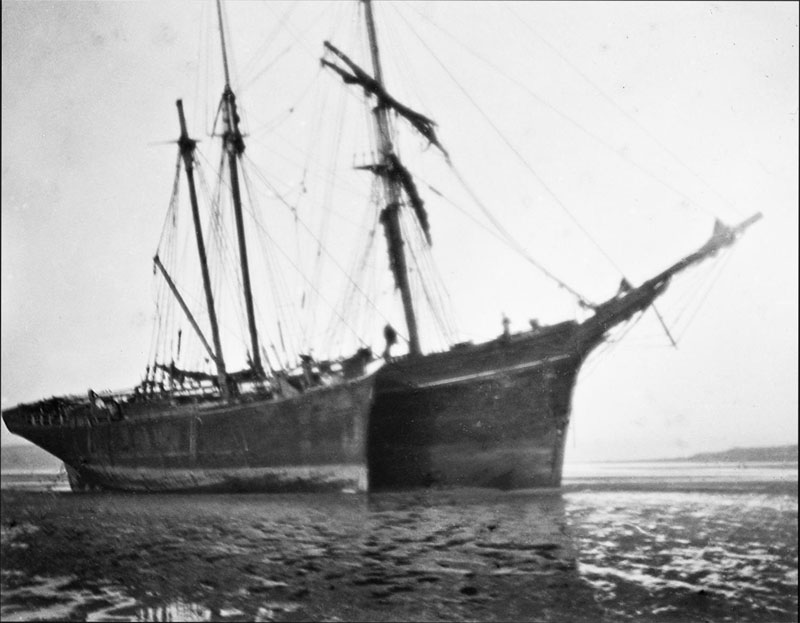
The Reliance, a 77 registered tons schooner, was aground in Chapel Bay, just around the point from Angle. In two months of hard labour the Rouses lightened her load, patched her holes, and eventually refloated her and brought her round into the bay where she could be moored and broken up.
This was all done by hand work and using the Rouses’ three small smacks. It must have been a valuable enough job to be worth their sweat.
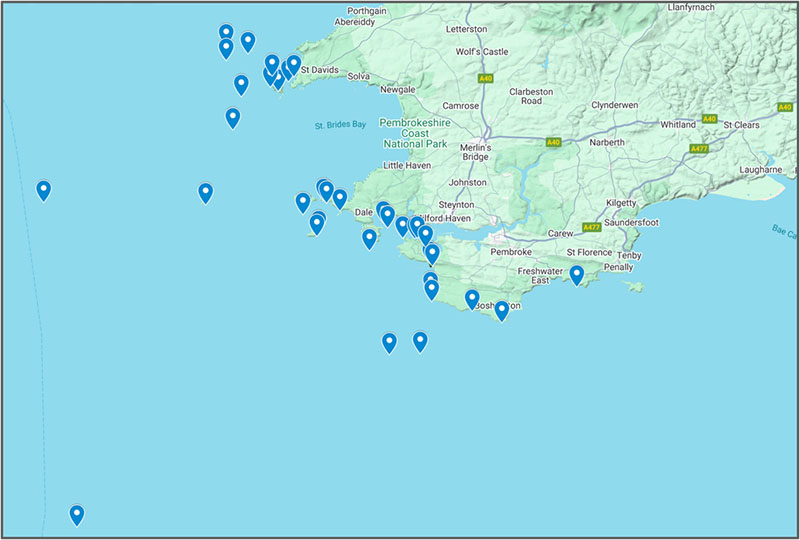
(Some locations approximate) A few more distant jobs (Llanelli, Hartland Point, even Stornoway on the Isle of Lewis) not shown. Mostly within a few hours’ steaming from Angle or Hazelbeach. Local knowledge essential -- often working close to dangerous rocks.
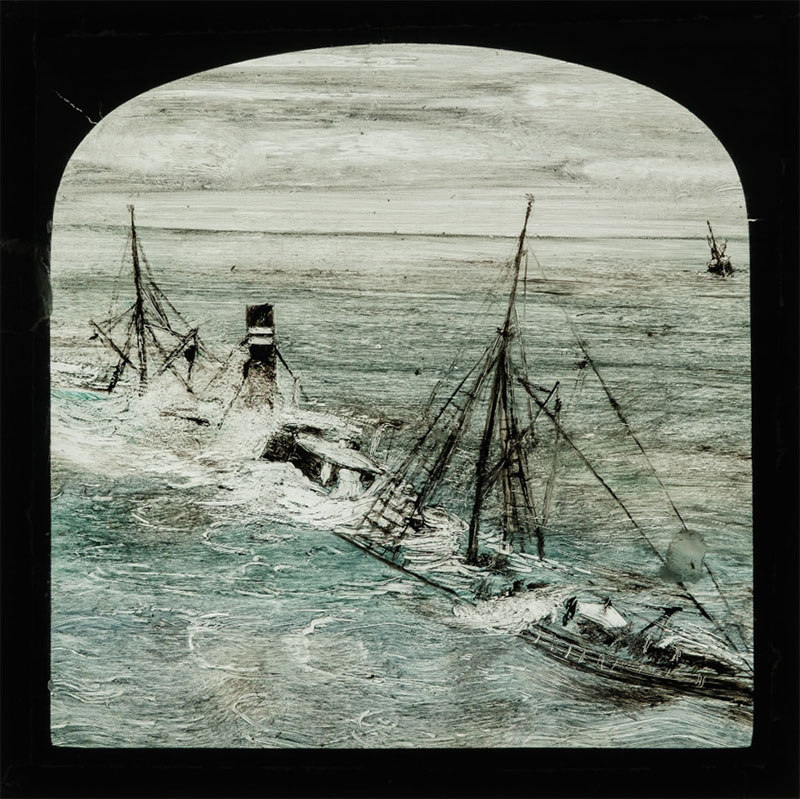
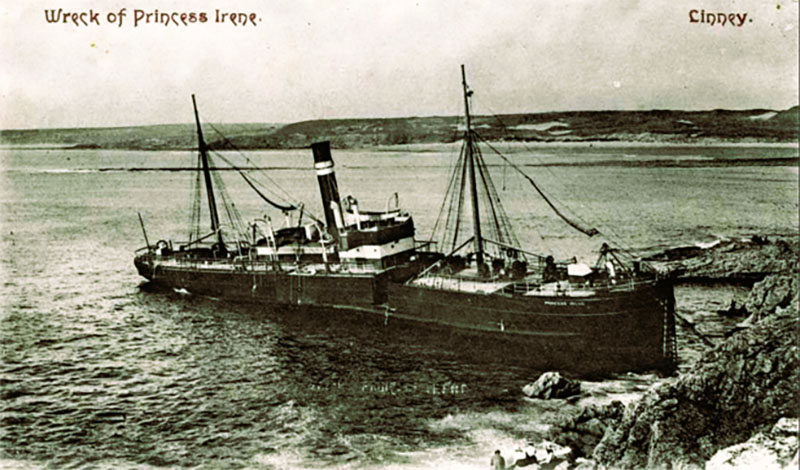
The Wreck of the Princess Irene, August 1906: almost on their doorstep, at Linney Head; first new salvage job with the “Dardare”; profitable -- £458, = £240,000 relative to average wages then & now.
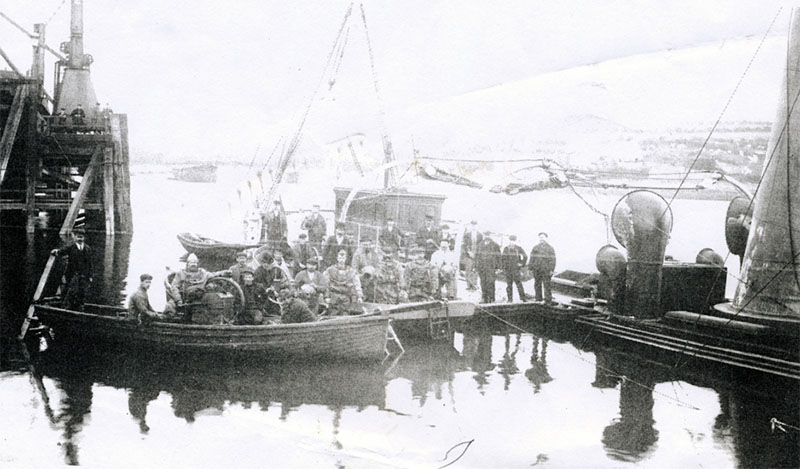
I don’t think this photo of divers at Neyland in the early 1900s is the Rouses, but the equipment and techniques were the same -- a hand-operated Siebe-Gorman air pump in a rowing boat to sustain a diver in a rubberized canvas suit and heavy lead boots, lead belt, and copper diving helmet. We still had all of the old kit until a clearout of the Tin Shed in the late 1970s.
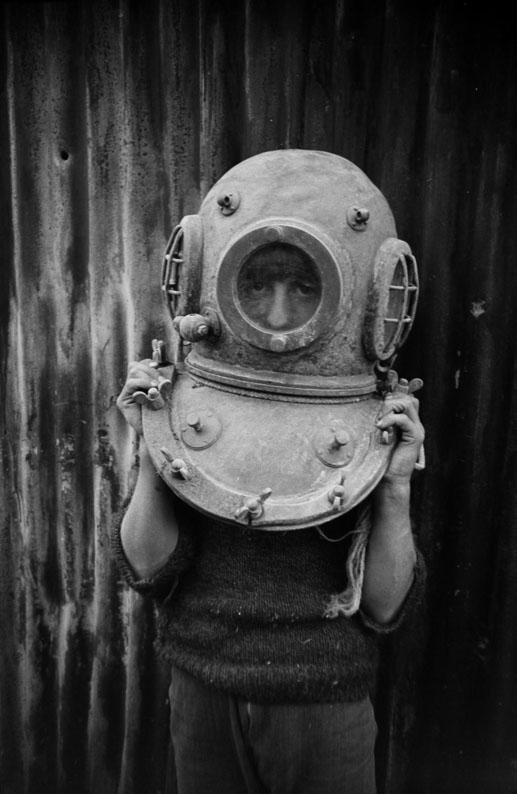
We played with all of the old kit when I was growing up, turning the wheel of the air pump and trying bits of the diving suit. This photo is from 1964 and shows our friend the late Raymond Laugharne, who went on to become a diver in the North Sea oil industry, where he went a lot deeper than Uncle William ever did.
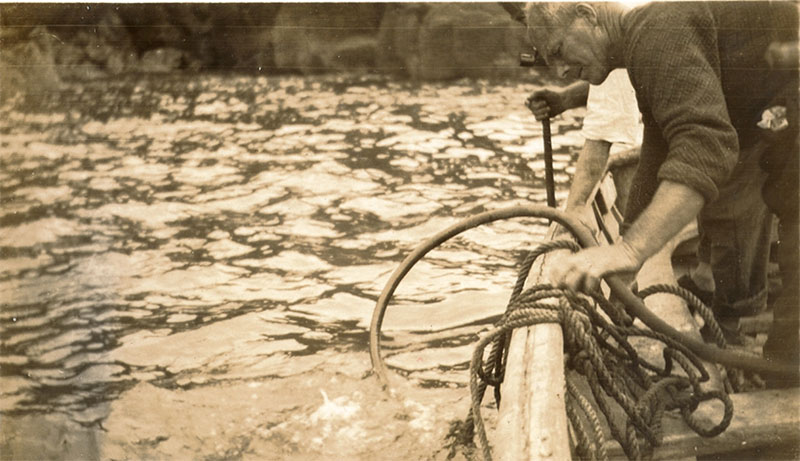
Uncle William is submerged (see the air bubbles), my grandfather is watching the air pipe and safety rope, Uncle Frank (pipe in mouth, as always) is standing by. They are in a rowing boat maybe 15 feet long with the Siebe-Gorman pump. The rocks are close. This is probably the wreck of HMS Tormentor, east of Manorbier, in the 1930s.
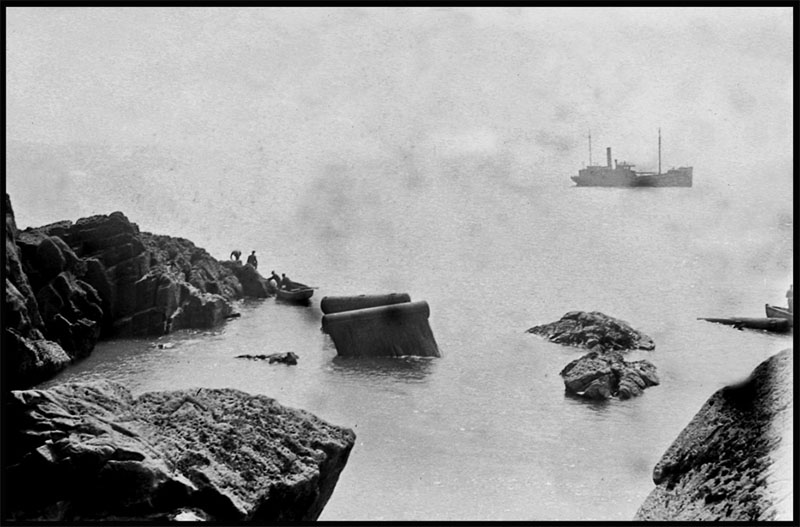
This old destroyer came adrift while being towed to be broken up in 1929 and was a total loss. In January 1930 the Rouses bought the wreck for £255 (£59,000). They won a lot of good scrap from her over succeeding years. It took 3 weeks of hard work to salvage the cast bronze propeller, a most valuable trophy, but they lost it on the way home when the ropes slinging it below the bow of the Eden chaffed through.
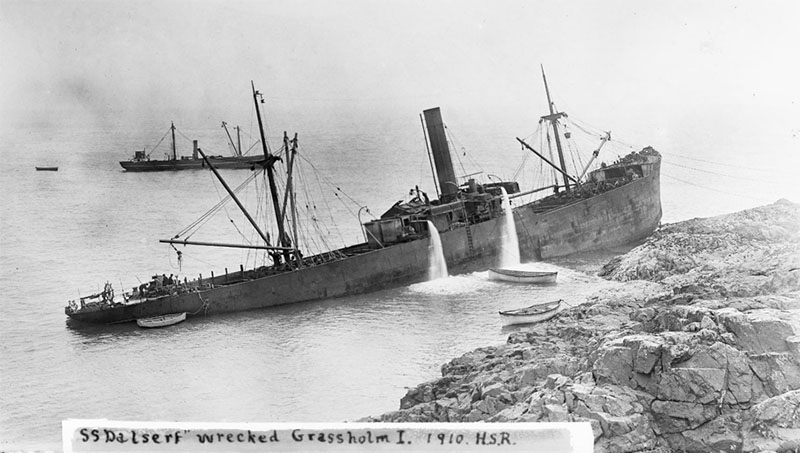
The largest and most rewarding operation that the Rouses participated in before the war, and also the best documented. The Dalserf was a big, new freighter 260 feet long by 40 wide, carrying 2,700 tons of coal and reckoned to be worth £36,000 (tens of millions nowadays). She ran straight into Grassholm in heavy fog on the morning of 10th July, navigating by dead reckoning and miles from her intended track. Initial damage was small, but as the tide went out she began to thump on the rocks and the damage became much worse.
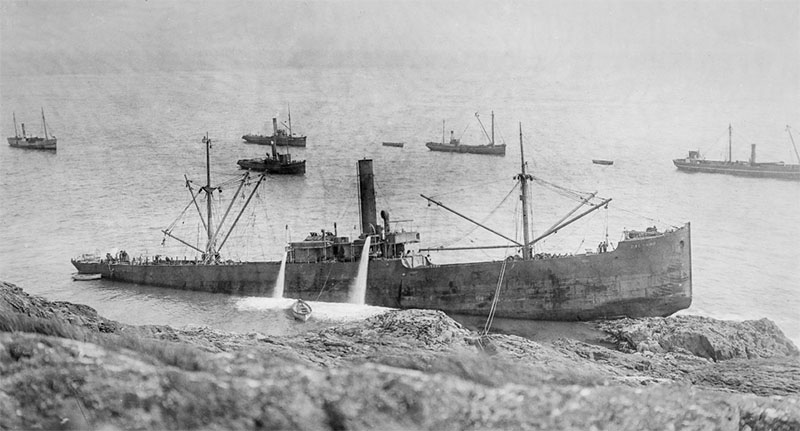
The Rouses were first on the scene, and began salvage work immediately, but they did not keep the job -- it was far too big for them -- and they became just subcontractors. But this was remunerative, and less risky too. Several firms and many men worked together to empty the Dalserf of her cargo, pump her out, and prepare her to be pulled off at the next high spring tide. The Rouses contributed their motor pumps -- their most valuable equipment, after their ships.
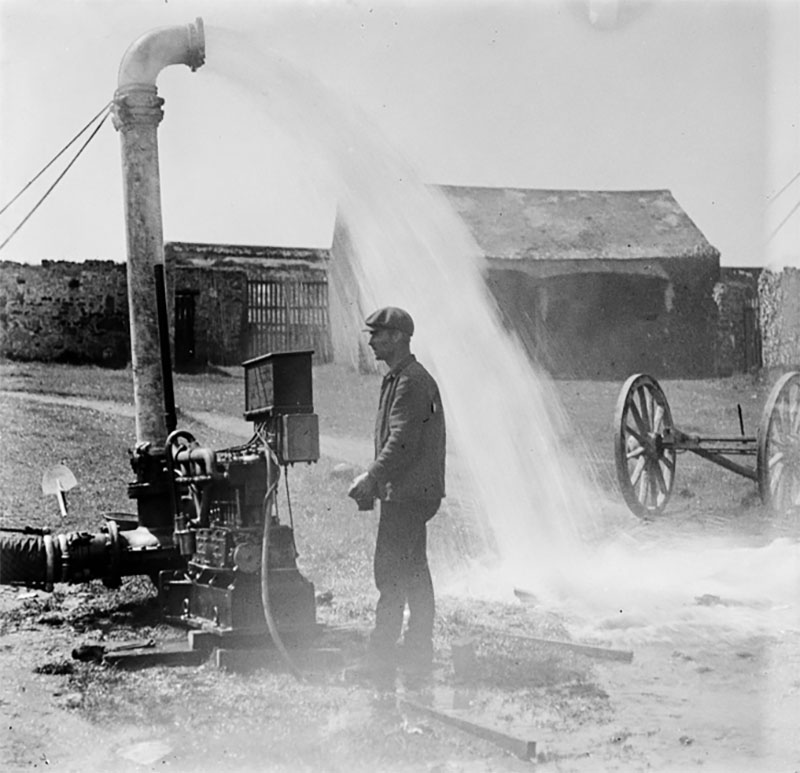
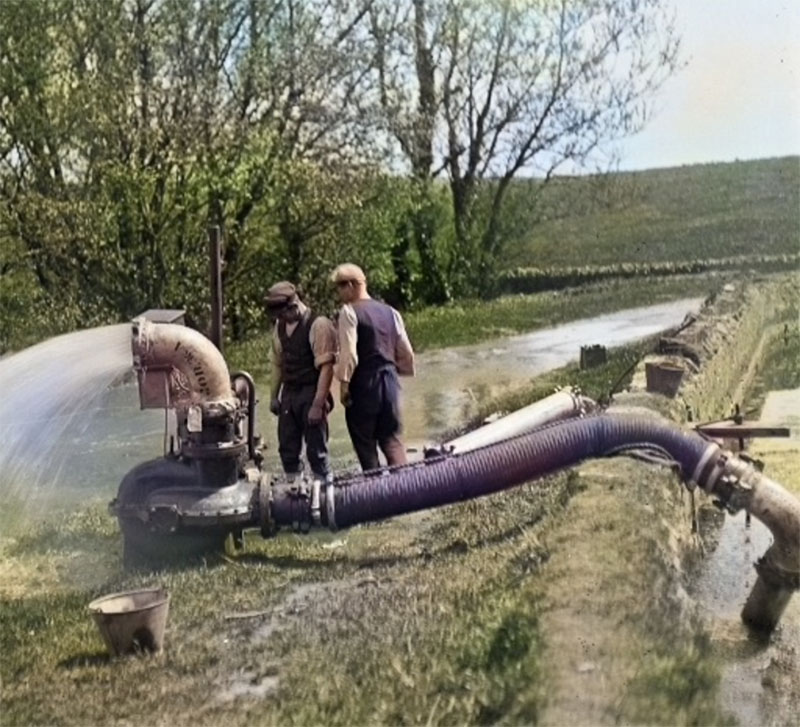
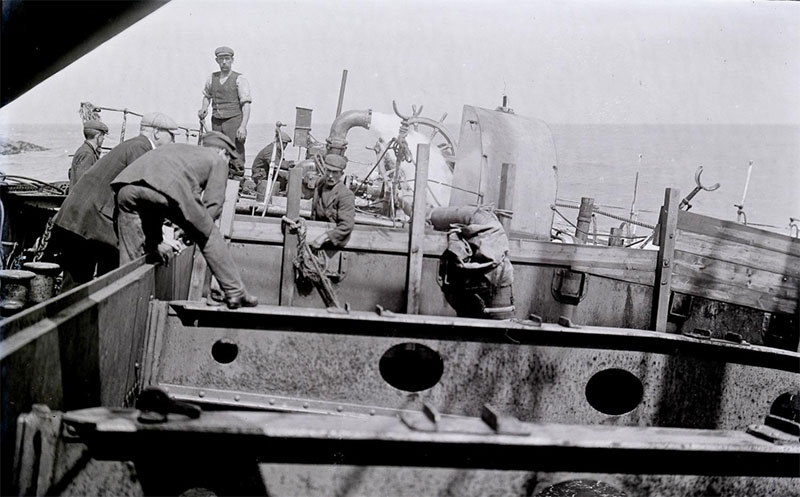
"Pumping Out the After Hold (& Trying to Stop the Sea Flooding over the Side at the Next High Tide)". I’m guessing, but it would make sense that Uncle Stanley would take photographs of his own crew working on their part of the job, with their own precious equipment. The wooden shuttering on the right of the picture was designed to stop the sea flooding over and undoing all of their work.
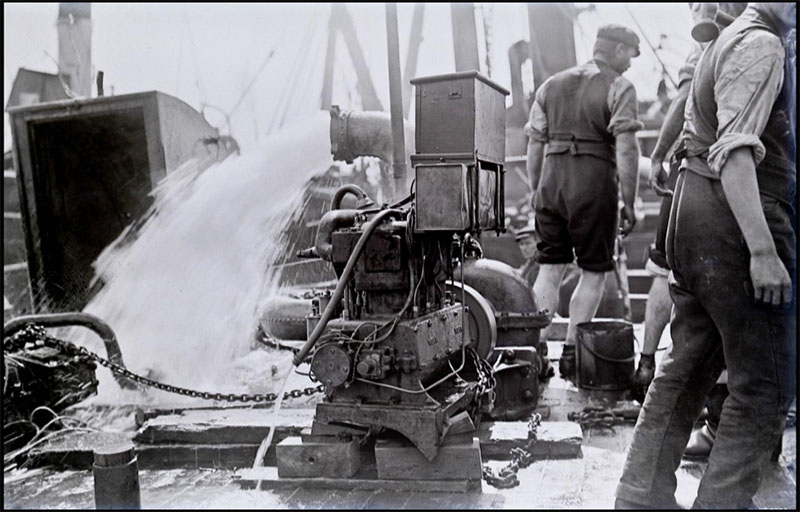
Fifteen years later, the Rouses valued their two motor-driven pumps at £1,100 (the equivalent of at least £250,000 nowadays) for insurance purposes -- by then significantly more than the cost, if not value, of the Eden. They were not just essential on salvage jobs, they could also help pay for themselves by being hired out to other users -- they were in high demand.
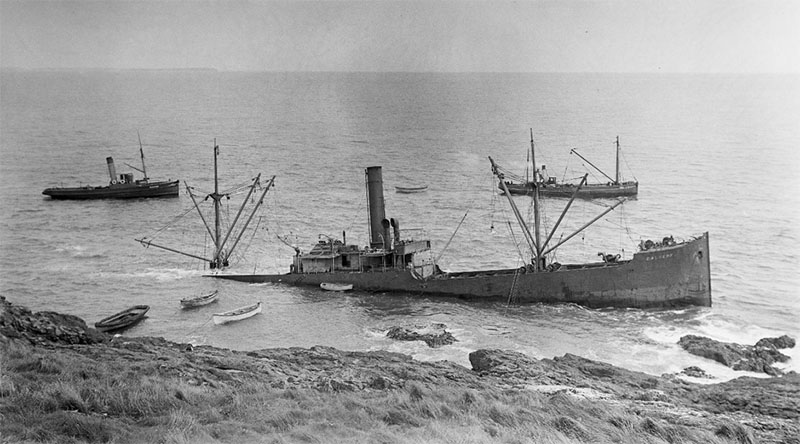
Weeks of effort failed. It was just not possible for the pumps to keep up with the inrush of water after the salvage crews had managed to almost empty the holds and pull the ship off the rocks, so she was run aground again. In this picture the Dardare is on the right; the Rouses’ diving boat (the large one moored to the shore) and their Greyboat are tied up alongside the Dalserf. The Greyboat sits nowadays outside 29 Church Road, gently rotting as she has for the last fifty years.
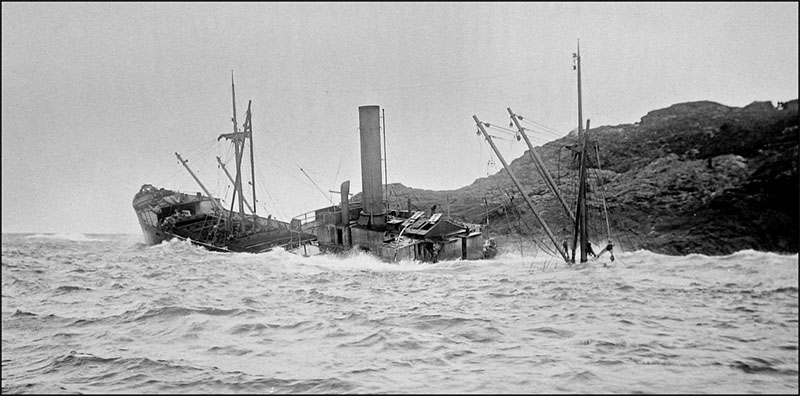
Disaster: After Several Weeks the Weather Breaks Mid-August, after almost six weeks of work and £5-6,000 of expenses and repeated, increasingly desperate attempts to refloat her. The Dalserf slips off the rocks and begins to break up
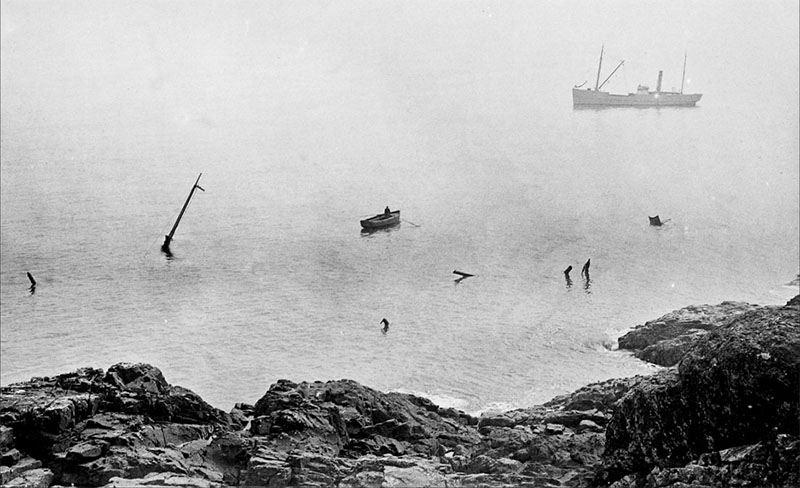
The Dalserf breaks into five pieces and settles where she still lies, as a dive site, 115 years later. The big salvage firms from Cardiff and Cornwall leave, and the remains are left to the Rouses. The Greyboat is inspecting the wreckage, while the Dardare stands off. The Rouses settled down to what they knew best, with Uncle William diving down to place explosives and ‘liberate’ the most valuable non-ferrous metal -- propeller, bearings, pipework, condensers -- from the wreck.
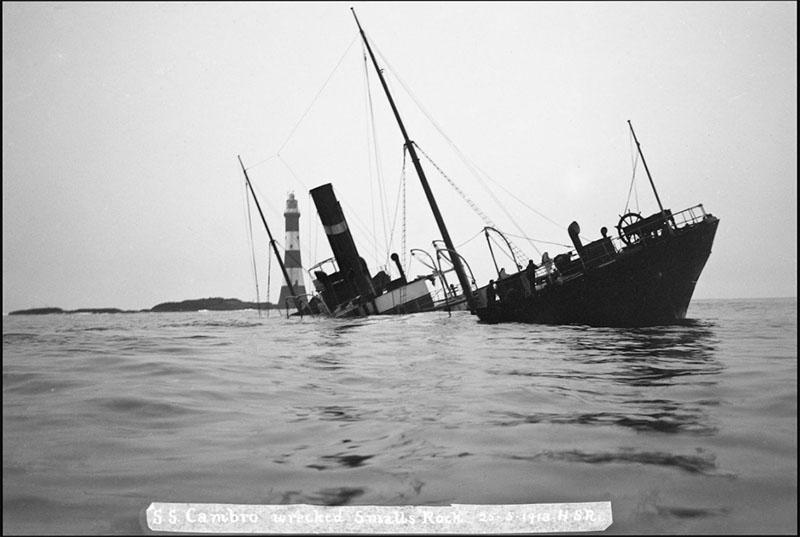
No other salvage operation is documented as thoroughly as that on the Dalserf. So the next couple of slides are just interesting photos of other prewar wrecks. The Cambro was about the same size as the Dalserf, but carrying iron ore, not coal. Like the Dalserf she ran aground in dense fog. If you look carefully you can see one of the Rouses’ boats alongside, and two men climbing onto the sloping deck, presumably to inspect.
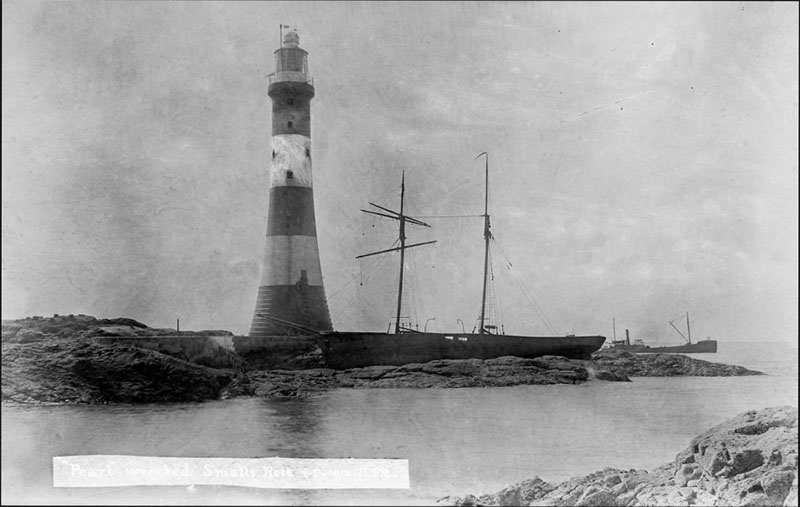
The Pearl was an Aberystwyth ship, carrying a cargo of coal. After she ran aground the lucky crew all managed to find shelter in the lighthouse. The Rouses attended the wreck, but salvage was impossible, and the Pearl broke up during a September gale.
The chief interest of this picture is that it shows the W.S. Caine, keeping a safe distance away from the rocks. In the 1920s the Rouses would take over the contract for monthly relief and resupply voyages to The Smalls for Trinity House.
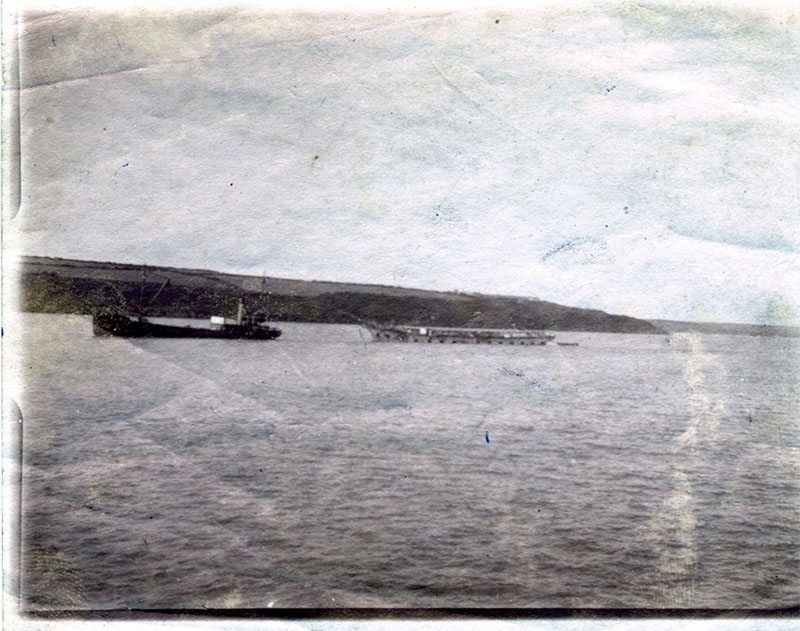
The Formosa, with a valuable timber cargo from Canada, ran aground off the North Bishop. The Rouses -- by 1915, just the three older brothers -- salvaged her and the W.S. Caine towed her back to Hazelbeach. But there she was completely destroyed by fire! The deterioration in the quality and number of photos was because Uncle Stanley and the other two younger brothers left for North America in October 1914 and did not return until 1921.
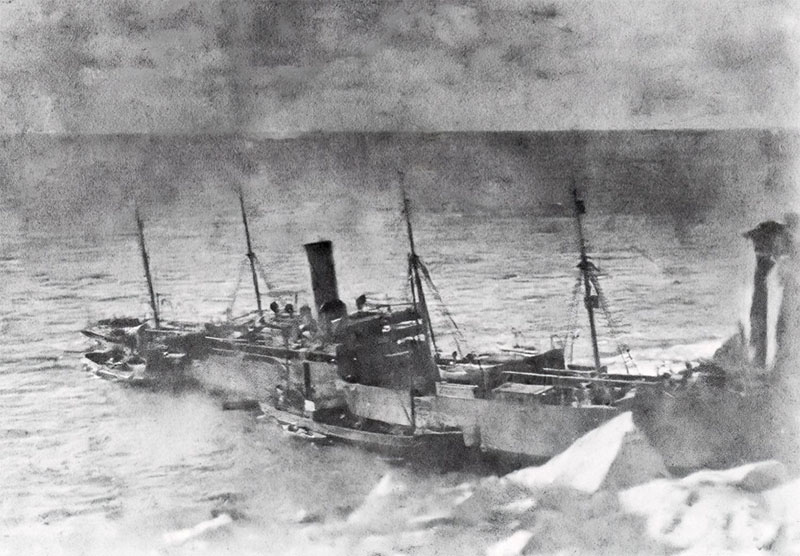
The Ionian was the largest (8,000 tons) and richest (a cargo/passenger liner rather than a humble freighter) ship the Rouses ever worked on. See how big she was compared with the W.S. Caine alongside! They worked on her soon after she was beached off Saddle Head by St. Govan’s after hitting a mine shortly after leaving Milford Haven. But they only bought her wreck, so that they could blow it apart and salve the valuable metal, in 1920, for £505 (= c. £77,000 in 2026). Kept them going for years.
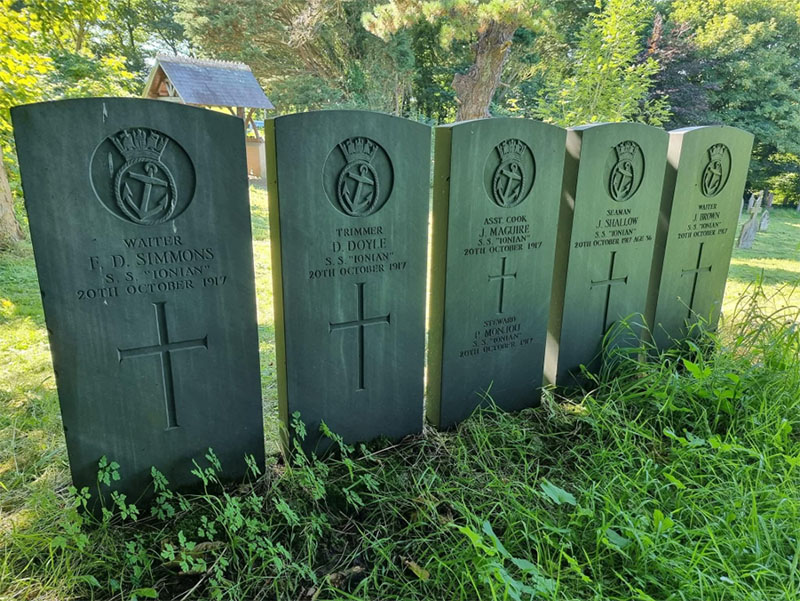
There were 160 people aboard when the Ionian hit the mine, and they all survived except for half a dozen whose lifeboat overturned. They are buried in Castlemartin churchyard.
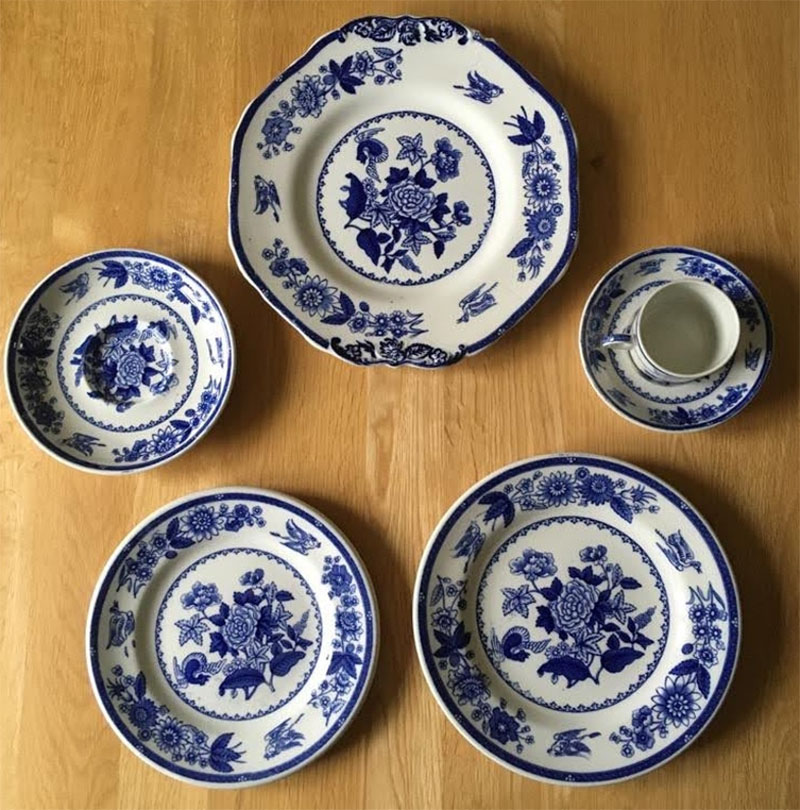
My grandfather built his corrugated-iron bungalow with his brothers’ help in 1922, and was finally able to move his growing family (5 children) out of rented accommodation. Some of the doors and items of furniture were taken from the Ionian, together with plenty of crockery and tableware. Even in the 1950s and 60s we dined off Allan Line crockery and ate with Allan Line silverware, some of which (napkin rings, forks, sugar bowls) is still in our possession.
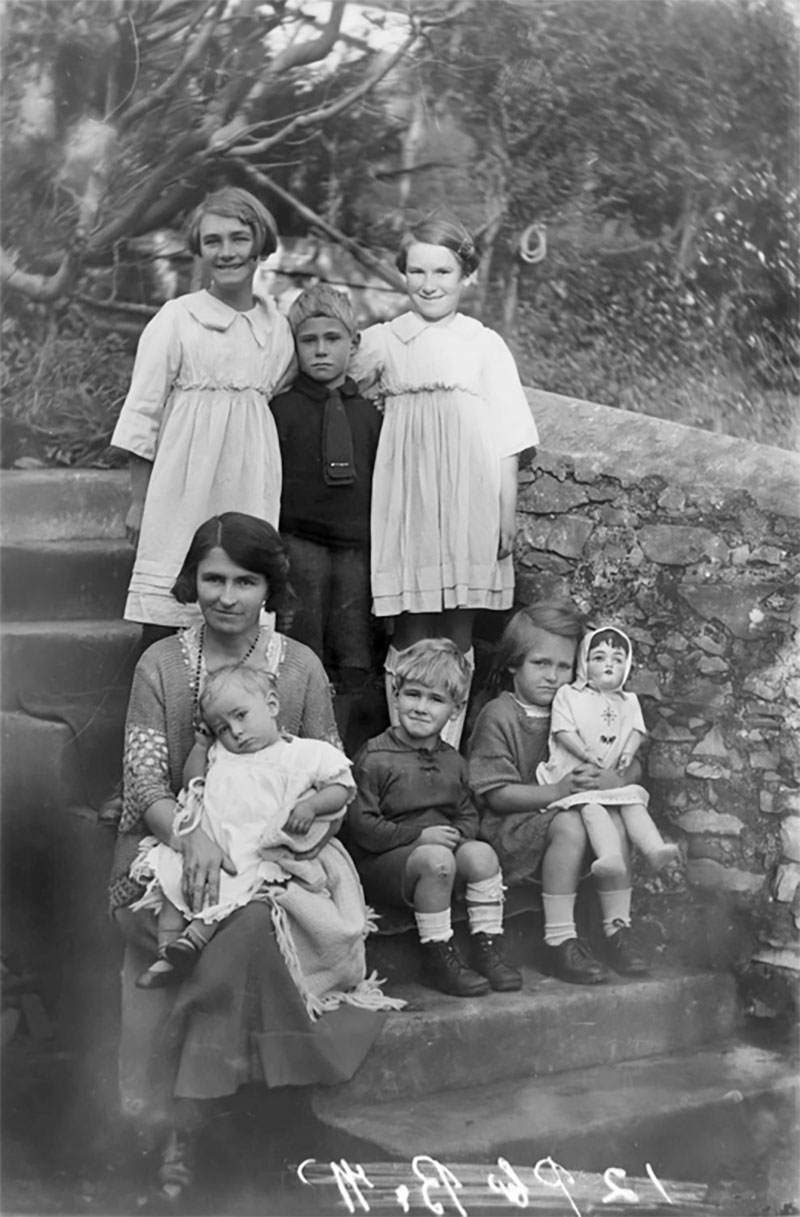
By the summer of 1924 my grandparents’ family was complete -- Rona (1913), Bernard (1917), Kay (1915) standing, Arnold (1924) in my grandmother’s arms, Frank (1920-1932), and my mother Margaret (1918). There had also been another daughter, Norah (1922-1923). My grandparents had to bring them up on income of about £150 a year by the late 1920s -- an average wage then. The salvage business was not very rewarding in the 1920s.
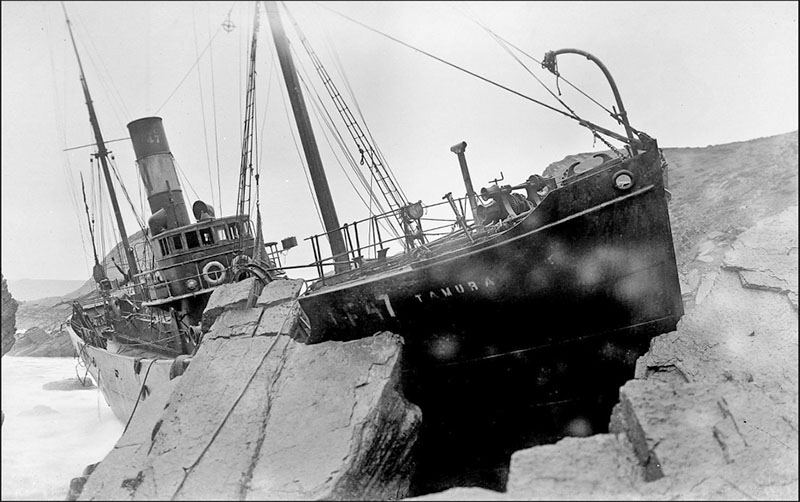
There were only 20 wrecks around Pembrokeshire in the decade after the war, half as many as in the decade before, a third as many as in the 1890s. The decline of coastal shipping, the replacement of sail by steam and more reliable motor power, and improved aids to navigation including radio and weather forecasts, all reduced the Rouses’ potential jobs. Fortunately they were able to return to their old wrecks, stripping them systematically of non-ferrous scrap. This is the steam trawler Tamura, wrecked by Gateholm in 1923.
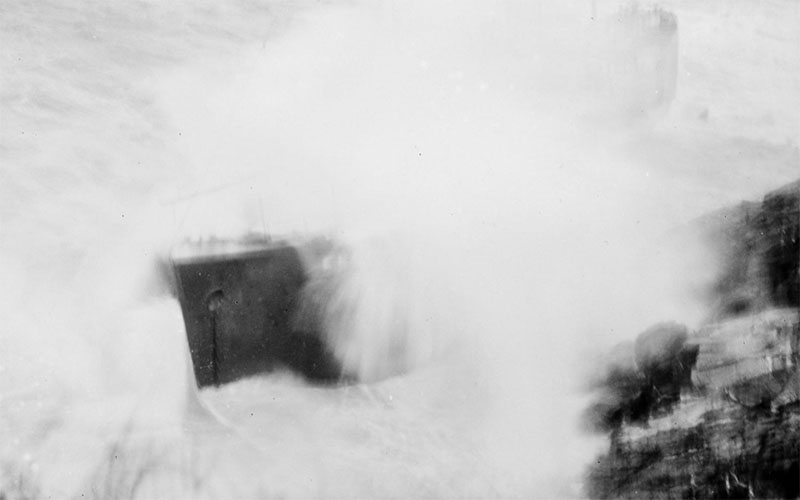
The Emmanuel, a big tramp steamer, ran aground opposite The Bitches in Ramsey Sound. She provided both the last big and successful salvage job the Rouses undertook, and the best documented apart from the Dalserf and the Reliance.
The first photograph in Uncle Stanley’s sequence illustrates how severe the storm was that wrecked the Emmanuel, and how surprising it was that she could be saved.
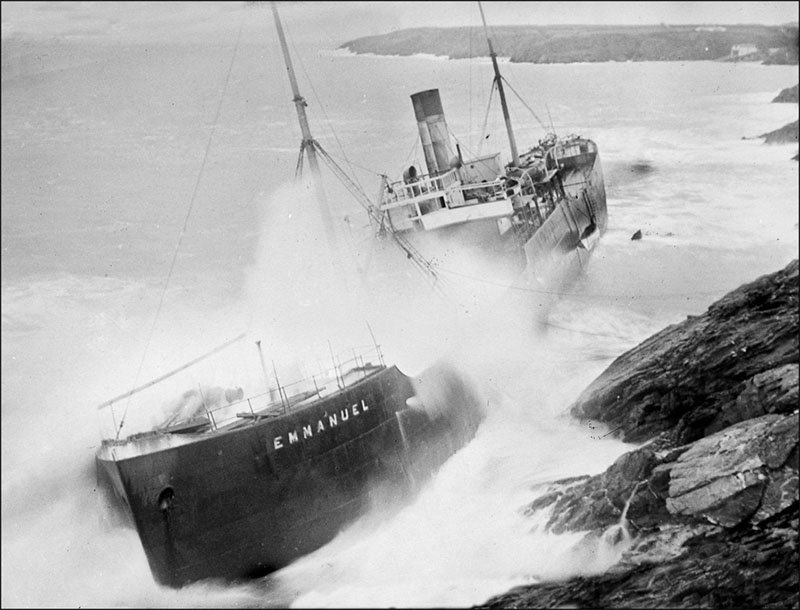
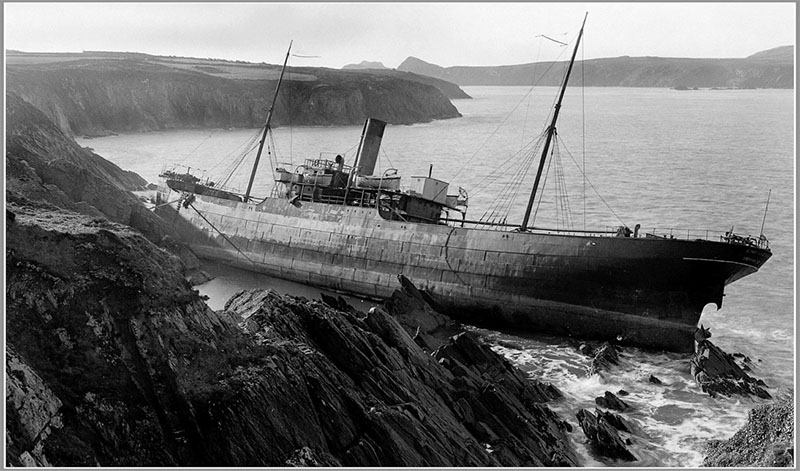
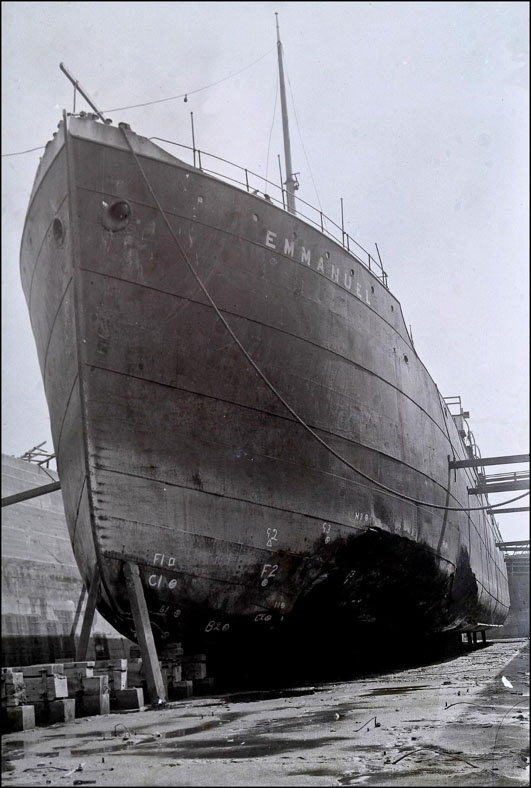
You can see how many damaged plates there were. It took the Rouses more than ten weeks’ work to make the Emmanuel seaworthy, get her off the rocks at a high spring tide, and tow her round to Milford Haven with their motor pumps going full speed. Their out-of-pocket expenses were £531 (= £120,000 in 2026). Unfortunately any prospect of a good profit disappeared when the Emmanuel collided with a Milford trawler, the Arthur Cavanagh, while being manoeuvred into port, and the Rouses had to pay £220 (£49,000) damages. That was not the end of this sad story. The Emmanuel’s Greek owners decided that the damage was too much to be worth repairing, and after being saved the ship was scrapped at Ward’s yard.